
Anúncios
Ever wondered what your feline friend is trying to tell you with those meows, purrs, and chirps? Cat translator apps promise to bridge the communication gap between humans and cats.


The relationship between cats and their owners has always been mysterious and intriguing. While dogs wear their emotions on their sleeves, cats are masters of subtlety, communicating through a complex system of vocalizations, body language, and behaviors that often leave us scratching our heads.
Anúncios
Technology has stepped in to help decode these feline mysteries. Cat translator apps have emerged as popular tools among pet owners who desperately want to understand what their cats are saying. But how do these apps actually work, and can they really translate your cat’s meows into human language?
🐱 Understanding Feline Communication Before Using Translation Apps
Cats communicate in remarkably sophisticated ways that go far beyond simple meowing. In the wild, adult cats rarely meow at each other—this vocalization is primarily reserved for communicating with humans. This fascinating adaptation shows how cats have evolved their communication specifically for us.
Anúncios
Feline vocalizations include meows, purrs, chirps, trills, growls, hisses, and yowls. Each sound carries different meanings depending on context, tone, pitch, and duration. A short, high-pitched meow might signal a greeting, while a prolonged, low-pitched meow could indicate distress or demand.
Body language plays an equally important role. Tail position, ear orientation, pupil dilation, and whisker placement all contribute to what your cat is communicating. A cat translator app focuses primarily on vocalizations, but understanding the complete picture requires observing your cat’s entire demeanor.
📱 How Cat Translator Apps Actually Work
Cat translator applications use sophisticated audio analysis technology to process feline vocalizations. When your cat meows, the app records the sound and analyzes various parameters including frequency, pitch, duration, and intensity patterns.
The technology compares these vocal patterns against extensive databases of cat sounds that researchers have associated with specific meanings or emotional states. Machine learning algorithms help identify similarities and provide translations based on these comparisons.
However, it’s important to understand that these apps aren’t performing literal translations like Google Translate does for human languages. Instead, they’re making educated interpretations based on general patterns observed in feline behavior studies. Each cat has unique vocal characteristics, making universal translation challenging.
The Science Behind Voice Recognition Technology
Modern cat translator apps employ similar technology used in human voice assistants like Siri or Alexa. Digital signal processing breaks down audio into analyzable components, extracting features that characterize different types of meows.
Researchers have identified that cats produce sounds in specific frequency ranges, typically between 500 Hz and 2,000 Hz. The apps analyze where your cat’s vocalizations fall within this spectrum and match them to behavioral categories like hunger, affection, irritation, or playfulness.
Some advanced applications also incorporate artificial intelligence that claims to learn your specific cat’s vocal patterns over time, theoretically improving translation accuracy as you use the app more frequently with the same cat.
🎯 Key Features Found in Cat Translator Applications
Most cat translator apps share common features designed to help pet owners better understand their feline companions. The core functionality revolves around recording and analyzing cat vocalizations, but many apps offer additional tools that enhance the user experience.
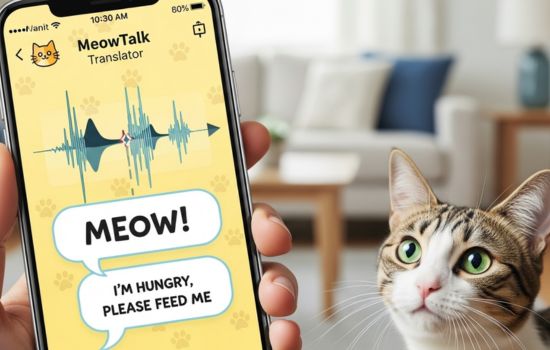
Real-time translation is the primary feature, allowing you to record your cat’s meows and receive immediate interpretations. The app typically displays the suggested meaning along with a confidence level or percentage indicating how certain the algorithm is about its translation.
Human-to-Cat Translation Mode
An entertaining feature found in many cat translator apps is the reverse function—translating human speech or phrases into cat sounds. You can select common phrases like “I love you,” “time to eat,” or “let’s play,” and the app generates corresponding cat vocalizations.
While scientifically questionable, this feature provides entertainment and might capture your cat’s attention. Some users report that their cats respond with curiosity to these generated sounds, though whether cats actually understand them as communication remains debatable.
Vocalization History and Tracking
Many apps include logging features that track your cat’s vocalizations over time. This creates a history of translations that might help you identify patterns in your cat’s communication habits, such as specific times when they’re more vocal or recurring themes in their “messages.”
This tracking can provide insights into your cat’s routine and emotional state. If your cat suddenly becomes more vocal at unusual times or the translations consistently indicate distress, this might signal health or behavioral issues worth discussing with your veterinarian.
💡 Practical Applications and Benefits for Cat Owners
Beyond entertainment value, cat translator apps can serve practical purposes for attentive pet owners. While not scientifically validated as precise translation tools, they encourage owners to pay closer attention to their cats’ communication patterns.
New cat owners particularly benefit from these apps as learning tools. By suggesting possible meanings for different vocalizations, the apps help inexperienced owners become more aware of what different meows might indicate, even if the specific translations aren’t always accurate.
The apps also create bonding opportunities. Using the app together with your cat turns communication into an interactive activity, and the time spent observing and recording your cat’s sounds naturally increases your attentiveness to their needs and behaviors.
Identifying Distress and Health Concerns
Some cat owners have found translator apps helpful in recognizing when their cats are experiencing discomfort. While the app itself doesn’t diagnose medical conditions, it might flag unusual vocalizations that prompt owners to observe their cats more carefully.
Changes in vocalization patterns can indicate health issues. A cat that suddenly becomes more vocal, changes pitch dramatically, or produces sounds the app consistently interprets as distress might need veterinary attention. The app serves as a reminder to trust your instincts when something seems off.
🔬 The Scientific Perspective on Cat Translation Technology
Pet behavior experts and veterinarians maintain healthy skepticism about cat translator apps. While the technology is impressive, feline communication is far more complex and context-dependent than any app can currently interpret with genuine accuracy.
Dr. Susanne Schötz, a phonetics researcher at Lund University who studies cat vocalizations, emphasizes that cats don’t have a universal language. Each cat develops unique vocal patterns influenced by breed, personality, relationship with their owner, and individual experiences.
Scientific studies on feline communication focus on broad categories of sounds associated with general emotional states rather than specific messages. Researchers can identify patterns suggesting contentment, frustration, or fear, but translating these into specific phrases like “I’m hungry” or “pet me now” oversimplifies the complexity.
What Research Tells Us About Cat Vocalizations
Academic research has identified that cats modify their vocalizations based on their audience. Cats use different sounds when communicating with humans versus other cats, suggesting they’ve learned which sounds elicit desired responses from us.
Studies also reveal that cat owners become surprisingly adept at interpreting their own cats’ vocalizations without technological assistance. Experienced owners can distinguish between different types of meows from their cats with remarkable accuracy, understanding context-specific meanings that no app could determine.
The limitation of current technology is its inability to account for context, relationship history, environmental factors, and the cat’s complete body language—all crucial elements in understanding what a cat truly means when vocalizing.
🎮 Entertainment Value vs. Practical Utility
Most developers and honest users acknowledge that cat translator apps are primarily entertainment tools rather than scientifically accurate communication devices. The apps provide fun, engaging experiences that cat lovers enjoy, even when taking translations with a grain of salt.
The entertainment aspect shouldn’t be underestimated or dismissed. Apps that strengthen the bond between pets and owners, encourage interaction, and make pet ownership more engaging serve valuable purposes, even if they don’t provide literal translations.
Social media has amplified the popularity of these apps, with countless videos showing cats’ apparent “conversations” going viral. This social aspect adds another dimension to the app experience, allowing cat owners to share humorous moments with their online communities.
🌟 Choosing the Right Cat Translator App for Your Needs
With numerous cat translator apps available, selecting one depends on what you hope to achieve. If you want pure entertainment, any well-reviewed app with good audio processing will suffice. For educational purposes, look for apps that provide information about feline behavior alongside translations.
User reviews offer valuable insights into app functionality. Pay attention to comments about accuracy, ease of use, and whether the app requires subscriptions or contains excessive advertisements that interrupt the experience.
Consider apps that offer additional features beyond simple translation. Some include cat training tips, health tracking, behavior guides, or integration with other pet care tools, providing more comprehensive value for cat owners.
Privacy and Data Considerations
Before downloading any app, review its privacy policy. Some apps collect audio data, usage patterns, and other information. Understand what data the app collects, how it’s used, and whether it’s shared with third parties.
Free apps often monetize through data collection or advertising. If privacy concerns you, consider premium versions that eliminate ads and typically collect less user data. Always download apps from official stores like Google Play or Apple App Store to avoid security risks.
🚀 Maximizing Your Experience with Cat Translator Apps
To get the most from your cat translator app, use it as one tool among many for understanding your feline friend. Combine app insights with observation of body language, context awareness, and knowledge of your specific cat’s personality and habits.
Record your cat in various situations—during feeding time, play sessions, when seeking attention, or when appearing distressed. Comparing translations across different contexts helps you identify patterns and understand which interpretations seem most accurate for your particular cat.
Don’t rely exclusively on the app for understanding your cat. If the app suggests your cat is content but their body language indicates stress, trust your observations and instincts. Technology should supplement, not replace, attentive pet ownership.
Making It Interactive and Fun
Turn using the app into an engaging activity. Try the human-to-cat translation feature and observe how your cat responds. Create games around the app’s features, rewarding your cat when they vocalize in response to app-generated sounds.
Share results with family members or fellow cat owners. Comparing experiences and interpretations can be entertaining and might reveal insights about different cats’ communication styles. Just remember to maintain realistic expectations about translation accuracy.
🏆 The Future of Pet Communication Technology
As artificial intelligence and machine learning technologies advance, future iterations of cat translator apps may become more sophisticated. Researchers are exploring ways to incorporate multiple data streams—vocalizations, body language, context—into more comprehensive communication analysis systems.
Emerging technologies like computer vision could allow apps to analyze your cat’s entire demeanor simultaneously with their vocalizations, providing more nuanced interpretations. Wearable pet technology might integrate with translator apps, adding physiological data like heart rate to improve understanding.
However, even with technological advances, the unique individuality of each cat will always present challenges to universal translation. The most effective approach will likely remain a combination of technology, research-based knowledge, and the irreplaceable intuition developed through spending quality time with your cat.
🎁 Building Stronger Bonds Through Communication Attempts
Regardless of scientific validity, cat translator apps serve a meaningful purpose by encouraging owners to engage more deliberately with their pets. The act of listening carefully, trying to understand, and responding thoughtfully strengthens the human-animal bond.
Cats are perceptive creatures who notice when you’re paying attention to them. Using a translator app requires focused interaction—recording their sounds, responding to results, and spending dedicated time together. This attention itself benefits your relationship, independent of translation accuracy.
The apps also remind us that our cats are constantly communicating with us. Whether through meows, purrs, tail movements, or head bumps, they’re always expressing themselves. Tools that heighten our awareness of this communication, even imperfectly, help us become more responsive, attentive pet owners.
🎯 Final Thoughts on Decoding Your Cat’s Messages
Cat translator apps represent a fascinating intersection of technology, pet ownership, and our desire to connect more deeply with our animal companions. While they shouldn’t be viewed as scientifically precise translation devices, they offer entertainment, education, and opportunities for engagement.
The most valuable aspect of these apps isn’t the specific translations they provide but how they encourage us to listen more carefully to our cats. By paying closer attention to vocalizations, patterns, and contexts, we naturally become better at understanding what our feline friends need and want.
Your cat’s meows, combined with their body language and behavior, tell rich stories about their inner lives. Technology can help guide your interpretation, but the real understanding comes from the time you invest in observing, interacting with, and genuinely caring about your cat’s wellbeing.
Whether you download a cat translator app for laughs, curiosity, or genuine desire to communicate better, approach it with realistic expectations and an open mind. Use it as a starting point for deeper observation rather than a definitive answer key. Your relationship with your cat will benefit most from your attention, patience, and willingness to learn their unique language—one meow at a time.
