
Anúncios
Losing everyday items like keys, wallets, or bags can be frustrating and time-consuming. Fortunately, modern technology offers a smart solution through object detector applications designed to help you locate your missing belongings quickly.


We’ve all experienced that moment of panic when we can’t find something important right when we need it most. Whether you’re rushing out the door for an important meeting or trying to leave for vacation, misplaced items can throw your entire schedule into chaos. The good news is that technology has evolved to address this common problem in remarkably effective ways.
Anúncios
Lost object detector apps have revolutionized how we keep track of our belongings. These innovative applications work with Bluetooth tracking devices to create a network that helps you pinpoint the exact location of your items. From preventing theft to saving precious time, these tools have become essential companions in our increasingly busy lives.
🔍 How Lost Object Detector Apps Actually Work
Understanding the technology behind these applications helps you appreciate their capabilities and limitations. Most lost object detector apps operate through a combination of Bluetooth Low Energy (BLE) technology and crowd-sourced location networks. When you attach a small tracking device to your belongings, it continuously emits a Bluetooth signal that your smartphone can detect within a certain range.
Anúncios
The basic principle is straightforward: when your item goes missing, you open the app and activate the search function. If the object is within Bluetooth range (typically 30-100 meters depending on the device), the app will help you locate it by showing the signal strength or making the tracker emit a sound. The closer you get, the stronger the signal becomes, guiding you directly to your lost item.
What makes these systems truly powerful is the crowd-sourced network feature. When your item moves beyond your personal Bluetooth range, other users’ devices running the same app can anonymously detect your tracker’s signal and update its location in the network. This happens completely in the background, maintaining everyone’s privacy while creating a vast search network spanning entire cities.
📱 Essential Features to Look for in Object Detector Applications
Not all lost object detector apps offer the same capabilities. When choosing the right solution for your needs, consider these critical features that separate excellent apps from mediocre ones.
Real-Time Location Tracking
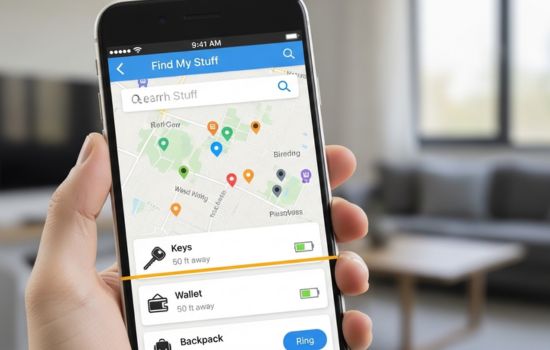
The best applications provide accurate, real-time updates on your item’s last known location. This feature displays a map interface showing where your tracker was last detected, complete with timestamps. Some advanced apps even show a location history, allowing you to trace your item’s movements over time.
Proximity Alerts and Separation Warnings
Imagine receiving a notification the moment you walk away from your bag or wallet. Proximity alerts automatically notify you when you’re about to leave something behind, preventing loss before it happens. This proactive approach transforms these apps from recovery tools into prevention systems.
Community Find Network
The power of crowd-sourced tracking cannot be overstated. Apps with large user bases create extensive networks where millions of devices act as potential detection points for your lost items. The larger the community, the higher your chances of recovering something lost far from home.
Multi-Device Management
Most people don’t just track one item. Quality apps allow you to manage multiple trackers simultaneously, each with custom names and icons. You might track your keys, wallet, backpack, pet collar, and even your car, all from a single intuitive interface.

💡 Practical Uses That Go Beyond Finding Lost Keys
While finding misplaced everyday items represents the primary use case, these versatile applications serve many other valuable purposes that users often discover over time.
Travel Security and Luggage Tracking
Air travelers have embraced object detector apps as essential travel companions. Placing a tracker in your checked luggage provides peace of mind throughout your journey. You can monitor whether your bag made the connection during layovers and verify it arrived at your destination. If airlines misplace your luggage, you’ll have location data to help recovery efforts.
Pet Safety Monitoring
Many pet owners attach Bluetooth trackers to their animals’ collars as an additional safety layer beyond traditional ID tags. While not a replacement for dedicated GPS pet trackers (which offer greater range), these devices work excellently for indoor cats who might slip outside or dogs in fenced yards.
Child Safety in Crowded Spaces
Parents visiting theme parks, festivals, or busy shopping centers sometimes attach trackers to their children’s clothing or backpacks. If a child wanders away in a crowd, parents can quickly determine their direction and distance, reducing those terrifying moments of separation.
Valuable Equipment Protection
Photographers, musicians, and professionals with expensive equipment use these trackers to monitor their gear. Whether at events, studios, or during transport, knowing your valuable equipment’s location adds a security layer that helps prevent theft and aids recovery if items go missing.
🛡️ Privacy and Security Considerations
With any location-based technology, privacy concerns naturally arise. Reputable object detector apps take security seriously and implement multiple safeguards to protect users.
Anonymous detection represents a cornerstone of these systems. When another user’s device detects your lost item, they never see any information about you or your tracker. The system operates entirely in the background, with encrypted location data transmitted securely to your account only.
Most quality apps also include anti-stalking features. These systems detect when an unknown tracker travels with you over time and sends alerts warning you of potential unwanted tracking. This important safety feature helps prevent malicious uses of the technology.
End-to-end encryption protects your location data as it travels through the network. Only you can access your item’s location information through your authenticated account. Even the app developers typically cannot view your specific location data due to encryption protocols.
⚡ Maximizing Battery Life on Trackers and Smartphones
Battery management represents a practical concern for both the tracking devices and your smartphone. Most Bluetooth trackers use replaceable coin cell batteries lasting between six months to over a year, depending on usage intensity and tracker model.
To extend battery life on your trackers, minimize how often you trigger the sound alert feature, as this consumes significant power. Position trackers thoughtfully—devices constantly searching for connection because they’re at the edge of range drain batteries faster than those with stable connections.
On your smartphone, object detector apps generally use minimal battery power because they rely on Bluetooth Low Energy technology designed for efficiency. However, constantly checking the app or having numerous active searches simultaneously can increase consumption. Most modern apps optimize background processes to balance functionality with battery conservation.
🌍 Comparing Major Lost Object Detector Platforms
Several major platforms dominate the lost object detector space, each with distinct characteristics, strengths, and limitations.
| Feature | Apple AirTag/Find My | Tile Network | Samsung SmartTag |
|---|---|---|---|
| Network Size | Largest (billions of devices) | Large (millions of users) | Growing (Galaxy device users) |
| Compatibility | iOS devices only | iOS and Android | Samsung Galaxy devices |
| Precision Finding | Yes (iPhone 11 and newer) | Limited models | Yes (UWB models) |
| Battery Life | ~1 year (replaceable) | 1-3 years depending on model | ~5 months (rechargeable available) |
| Privacy Features | Extensive anti-stalking | Good privacy controls | Solid privacy protection |
Choosing the right platform depends primarily on your smartphone ecosystem. iPhone users benefit most from AirTags due to the massive Find My network and seamless integration. Android users with Samsung devices should consider SmartTags, while Tile offers the most universal compatibility across different phone brands.
🎯 Tips for Getting the Most From Your Detector App
Simply installing an app and attaching trackers represents just the beginning. These practical strategies help you maximize the effectiveness of your lost object detection system.
Strategic Tracker Placement
Think carefully about where you attach or place your trackers. For wallets, slim card-style trackers work best. Keys benefit from durable keychain models. Bags and backpacks should have trackers in interior pockets where they’re less likely to fall out or be discovered by potential thieves.
Regular Range Testing
Different environments affect Bluetooth range dramatically. Periodically test how far your phone can detect trackers in common locations like your home, office, or car. This knowledge helps you understand what to expect during actual searches.
Update App and Firmware Regularly
Developers continuously improve these applications with better algorithms, expanded features, and security patches. Enable automatic updates or check regularly to ensure you’re running the latest versions of both the app and tracker firmware.
Customize Alerts Thoughtfully
Set up separation alerts for items you frequently forget but disable them for trackers that legitimately separate from your phone regularly. For example, enable alerts for your wallet but perhaps not for your gym bag that stays in your locker while you work out.
Name Trackers Specifically
Instead of generic names like “Tracker 1,” use specific identifiers like “Brown Leather Wallet” or “Car Keys with Blue Fob.” This clarity helps when you’re frantically searching and need to identify the right tracker quickly.
🚀 The Future of Lost Object Detection Technology
Innovation in this space continues rapidly, with exciting developments on the horizon that promise even more powerful capabilities.
Ultra-wideband (UWB) technology already appearing in premium trackers provides precision finding with directional arrows and distance measurements accurate to centimeters. As more smartphones incorporate UWB chips, this feature will become standard, making searches remarkably accurate even in complex environments.
Artificial intelligence integration represents another frontier. Future apps may learn your routines and predict when you’re likely to forget items based on schedule disruptions or unusual patterns. Proactive notifications could remind you to check for important items before leaving locations.
Extended range technologies combining Bluetooth with other wireless protocols could expand detection ranges significantly. Some experimental systems already use WiFi and cellular networks to provide location updates without relying solely on Bluetooth proximity.
Augmented reality features may transform how we search for lost items. Imagine pointing your phone’s camera around a room while the app overlays directional cues and visual markers guiding you directly to your hidden tracker, even if it’s buried under cushions or in another room.
💰 Cost Considerations and Value Analysis
Investing in a lost object detection system involves both initial hardware costs and potential ongoing subscription fees, but the value proposition often justifies the expense.
Individual trackers typically range from $20 to $35, with multi-packs offering per-unit discounts. When you consider the cost of replacing a lost wallet (credit card reissue fees, driver’s license replacement, cash) or keys (rekeying locks, locksmith services), a single prevented loss often pays for an entire tracking system.
Some platforms charge optional subscription fees for premium features like extended location history, smart alerts, or priority support. Evaluate whether these extras genuinely benefit your usage patterns before subscribing. Many users find the free features entirely adequate for their needs.
The time-saving value deserves consideration beyond direct financial costs. How much is 30 minutes of frantic searching worth to you? What about the stress reduction knowing you can locate important items quickly? These intangible benefits often represent the system’s greatest value.
🔧 Troubleshooting Common Issues
Even the best technology occasionally presents challenges. Understanding common problems and solutions keeps your system running smoothly.
Tracker Not Appearing in App
If your tracker suddenly disappears from the app, first check that Bluetooth is enabled on your phone. Restart both your phone and the tracker (usually by removing and reinserting the battery). Ensure the tracker hasn’t run out of battery power and that you’re within expected range.
Inaccurate Location Information
Remember that Bluetooth tracking shows the last location where another device detected your tracker, not necessarily its current location. If location seems wrong, the tracker may have moved since last detection, or GPS accuracy on the detecting device might have been impaired (indoor locations, poor satellite visibility).
Separation Alerts Not Working
Check that you’ve enabled notifications for the app in your phone’s settings. Background app refresh must also be permitted for separation detection to function. Some aggressive battery optimization features disable these necessary background processes.
Sound Alert Too Quiet
Tracker speakers vary in volume, and environmental factors affect audibility. When searching, minimize other noise sources and listen carefully in areas where the signal strength indicates proximity. Some trackers allow volume adjustments through firmware updates.
🌟 Real-World Success Stories
The practical value of these applications shines through in countless real-world scenarios where users successfully recovered items that would otherwise have been lost forever.
One traveler recovered checked luggage that an airline had mistakenly routed to a different city by showing baggage claim staff the exact location data from their tracker. Another user found their stolen bicycle by tracking it to a specific apartment building and providing police with precise location information leading to recovery.
Parents have shared stories of quickly locating children who wandered away in crowded venues, turning potentially traumatic situations into minor inconveniences. Pet owners have found escaped animals by tracking them to hiding spots in yards or neighborhoods where they’d taken shelter.
These success stories highlight not just the technology’s effectiveness but also how it provides peace of mind knowing you have a reliable method for locating important belongings and loved ones.
✅ Making the Right Choice for Your Needs
Selecting the ideal lost object detector app depends on your specific circumstances, device ecosystem, and typical use cases. Start by identifying what you most frequently misplace and where those losses typically occur.
If you primarily need help finding items at home or work, any quality Bluetooth tracker will serve you well regardless of network size. However, if you travel frequently or worry about items lost in public spaces, prioritize platforms with the largest crowd-sourced networks relevant to your geographic locations.
Consider your smartphone platform carefully. iOS users gain tremendous advantages with Apple’s Find My network integration, while Android users have more flexibility with cross-platform solutions. Don’t choose based solely on tracker cost—network size and ecosystem integration often matter more than saving a few dollars on hardware.
Begin with tracking your most critical items rather than trying to tag everything immediately. Keys, wallets, and bags represent the most commonly misplaced items and offer the best return on your tracking investment. As you experience the system’s benefits firsthand, you can expand coverage to additional belongings.
Lost object detector applications represent a practical solution to a universal problem that technology has finally addressed effectively. By combining Bluetooth tracking devices with sophisticated smartphone apps and crowd-sourced networks, these systems help you quickly locate misplaced belongings while preventing future losses through proactive alerts. Whether you’re constantly searching for your keys or simply want peace of mind knowing you can find important items when needed, these innovative tools deliver genuine value that justifies their modest cost and minimal learning curve.
