
Anúncios
Real-time translator apps have revolutionized global communication, breaking language barriers instantly through advanced AI technology and voice recognition systems.

Imagine arriving in Tokyo without knowing a single word of Japanese, yet being able to hold fluid conversations with locals. Picture yourself attending an international business meeting where participants speak five different languages, and everyone understands each other perfectly. This isn’t science fiction—it’s the reality offered by modern real-time translator apps.
Anúncios
These powerful applications combine artificial intelligence, machine learning, and sophisticated voice recognition to provide instant translations across dozens of languages. Whether you’re traveling abroad, conducting international business, learning a new language, or simply connecting with people from different cultures, real-time translator apps have become indispensable tools in our increasingly globalized world.
🌍 How Real-Time Translation Technology Actually Works
The magic behind real-time translator apps involves multiple sophisticated technologies working simultaneously. When you speak into your device, the app first captures your voice through advanced microphones designed to filter background noise and focus on your speech patterns.
Anúncios
The audio is then processed through speech recognition algorithms that convert your spoken words into text. This step uses neural networks trained on millions of voice samples to accurately identify words, accents, and linguistic nuances. The system must distinguish between similar-sounding words based on context—a challenging task that modern AI handles remarkably well.
Once the speech is converted to text, natural language processing (NLP) algorithms analyze the sentence structure, identify grammatical patterns, and understand the contextual meaning. This is crucial because direct word-for-word translation often produces nonsensical results. The app must grasp idioms, cultural references, and the intended meaning behind your words.
The translation engine then converts the text into the target language, maintaining the original meaning while adapting to the grammatical structure and cultural context of the destination language. Finally, text-to-speech technology converts the translated text back into natural-sounding speech, complete with appropriate intonation and rhythm.
✨ Key Features That Define Top Translation Apps
Modern real-time translator apps offer far more than basic word conversion. The best applications include conversation mode, which allows two people speaking different languages to communicate seamlessly. The app automatically detects which language is being spoken and provides instant translations in both directions.
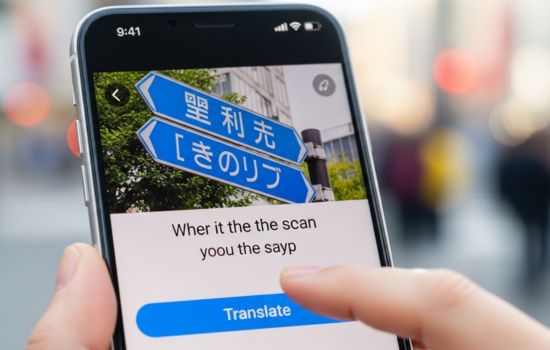
Camera translation represents another groundbreaking feature. Point your phone’s camera at a sign, menu, or document, and the app overlays the translated text directly onto your screen. This augmented reality approach makes navigating foreign countries dramatically easier, eliminating the frustration of trying to decipher restaurant menus or street signs.
Offline functionality has become essential for travelers who can’t always rely on internet connectivity. Premium translator apps allow you to download entire language packs, enabling full translation capabilities even in airplane mode. This feature proves invaluable when exploring remote areas or avoiding expensive international roaming charges.
Voice customization options let users select from different accents, speaking speeds, and voice types. Some apps even offer regional dialect variations, ensuring translations sound more natural to native speakers. This attention to detail significantly improves communication effectiveness.
🎯 Specialized Translation Modes
Different situations require different approaches to translation. Business mode optimizes translations for professional contexts, using formal language and industry-specific terminology. This ensures your translated communications maintain appropriate professionalism and credibility.
Educational mode includes pronunciation guides, grammar explanations, and vocabulary-building features. Students learning new languages benefit from seeing both translations and linguistic breakdowns that facilitate deeper understanding and faster learning.
Travel mode prioritizes common phrases, emergency vocabulary, and cultural etiquette tips. These apps often include pre-loaded phrases for hotels, restaurants, transportation, and medical situations—the essential scenarios travelers frequently encounter.
🚀 Practical Applications Across Different Scenarios
International business professionals rely heavily on real-time translator apps during negotiations, presentations, and client meetings. The ability to communicate complex ideas across language barriers without waiting for human interpreters accelerates deal-making and strengthens global partnerships. Video conference integration allows these apps to provide live captions during virtual meetings, ensuring all participants remain engaged regardless of their native language.
Healthcare providers use translation apps to communicate with patients who speak different languages, ensuring accurate symptom descriptions and treatment explanations. Medical translation modes include specialized terminology for anatomy, medications, and procedures—critical information that must be conveyed with absolute precision.
Tourists discover that real-time translators transform travel experiences from stressful to enjoyable. Rather than relying on hand gestures and hoping for the best, travelers can ask detailed questions, understand local recommendations, and engage in meaningful cultural exchanges. This deeper level of interaction creates richer, more memorable travel experiences.
Educational institutions incorporate translator apps into language learning curricula and international student support programs. Students studying abroad use these tools to navigate daily life while improving their language skills through real-world practice. The apps serve as training wheels that gradually become less necessary as fluency develops.
📊 Comparing Translation Accuracy and Limitations
While real-time translator apps have achieved remarkable accuracy, understanding their limitations remains important. Translation quality varies significantly based on language pairs. Apps typically perform best with widely-spoken languages that have extensive training data, such as English-Spanish or English-Mandarin translations.
Less common language combinations or endangered languages may produce less reliable results due to limited data available for training AI models. Regional dialects and slang expressions also challenge translation algorithms, which are often trained on formal or standardized language versions.
Context remains the greatest challenge for automated translation. Homonyms—words that sound identical but have different meanings—can confuse translation engines. Idioms and cultural references rarely translate literally, and apps sometimes struggle to capture intended nuances, particularly with humor, sarcasm, or emotional subtleties.
⚡ Real-World Accuracy Benchmarks
Independent testing shows that top-tier translation apps achieve approximately 85-95% accuracy for common language pairs in straightforward contexts. Technical or specialized content typically sees accuracy rates of 75-85%, while colloquial speech with heavy slang usage may drop to 60-75% accuracy.
These numbers continue improving as AI models become more sophisticated and training datasets expand. User feedback mechanisms built into modern apps allow systems to learn from corrections, continuously refining translation quality over time.
🔐 Privacy Considerations and Data Security
Real-time translator apps process potentially sensitive conversations, raising important privacy questions. Users should understand how apps handle their data. Some applications upload all audio and text to cloud servers for processing, creating potential security vulnerabilities if those servers are compromised.
End-to-end encryption ensures that only your device and the recipient can access translation content, preventing interception during transmission. Apps offering this feature provide greater security for confidential business discussions or personal conversations.
Offline translation modes offer maximum privacy since no data leaves your device. For highly sensitive communications, using downloaded language packs eliminates concerns about cloud storage or third-party access to your conversations.
Review each app’s privacy policy carefully, paying attention to data retention policies, third-party sharing practices, and the specific information collected. Some free apps monetize by sharing user data with advertisers—a tradeoff that may not be acceptable for business or personal privacy concerns.
💡 Tips for Maximizing Translation Quality
Speaking clearly and at a moderate pace dramatically improves recognition accuracy. Enunciate words distinctly without exaggerating pronunciation. Pause between sentences to give the app time to process complete thoughts rather than fragmentary phrases.
Minimize background noise whenever possible. Translation apps perform best in quiet environments where speech recognition can focus exclusively on your voice. When using translator apps in noisy settings like restaurants or busy streets, position yourself closer to the microphone and consider using headphones.
Use simple sentence structures for more reliable translations. Complex, multi-clause sentences with embedded ideas often confuse translation algorithms. Breaking thoughts into shorter, clearer sentences produces better results and facilitates smoother conversations.
Verify important translations through multiple sources, especially for critical communications. Cross-reference app translations with dictionary lookups or alternative translation services when accuracy is essential. This redundancy catches errors and ensures your message conveys the intended meaning.
🎤 Voice Training and Accent Adaptation
Many advanced translator apps include voice training features that adapt to your specific speech patterns and accent. Spending ten minutes training the app to recognize your voice can significantly improve ongoing accuracy. The system learns your pronunciation quirks, speech rhythm, and commonly used vocabulary.
Accent settings allow you to specify your regional speech variant, enabling better recognition of local expressions and pronunciation differences. An app trained on standard American English might struggle with Scottish or South African accents without appropriate configuration.
🌟 Choosing the Right Translator App for Your Needs
Selecting the ideal translation app depends on your specific use cases and requirements. Frequent international travelers prioritize offline capabilities, camera translation, and broad language coverage. Business professionals need formal translation modes, conversation recording features, and professional terminology databases.
Language learners benefit most from apps offering detailed explanations, pronunciation guides, and vocabulary-building tools. Students should seek apps with educational features that facilitate language acquisition rather than just providing quick translations.
Budget considerations also matter. Free apps provide basic translation services but typically include advertisements, limited language options, or restricted features. Premium subscriptions unlock advanced capabilities like offline downloads, unlimited translations, and specialized industry vocabularies.
Device compatibility affects functionality. Some apps work exclusively on smartphones, while others offer tablet, smartwatch, and desktop versions. Cross-platform synchronization ensures your translation history and custom phrasebooks remain accessible across all your devices.
🔮 The Future of Real-Time Translation Technology
Emerging technologies promise even more impressive translation capabilities. Neural machine translation continues evolving, with newer models understanding context, emotion, and cultural nuances with increasing sophistication. Future apps will likely distinguish between formal and informal contexts automatically, adjusting translations appropriately.
Augmented reality integration will expand beyond current camera translation features. Smart glasses equipped with real-time translators will display translated captions directly in your field of vision during conversations, creating truly seamless multilingual communication experiences.
Emotion recognition technology will enable apps to detect and convey emotional tone alongside literal translations. Understanding whether a speaker is joking, serious, or sarcastic helps preserve communication intent that often gets lost in pure word conversion.
Personalized AI assistants will learn your communication style, frequently-used terminology, and preferred phrasing over time. These systems will provide translations that sound authentically like your voice, maintaining your personality across language barriers rather than producing generic, robotic translations.
🎓 Educational Benefits Beyond Simple Translation
Real-time translator apps serve as powerful language learning accelerators when used strategically. Rather than creating dependency, these tools provide scaffolding that supports progressive language acquisition. Learners can attempt conversations in their target language with the safety net of instant translation when needed.
Comparative analysis features show side-by-side translations, helping users understand grammatical structures and vocabulary patterns. Observing how sentences construct differently across languages builds linguistic intuition that purely memorization-based learning rarely achieves.
Pronunciation feedback identifies specific sounds or word combinations that non-native speakers struggle with. These targeted corrections accelerate accent improvement and speaking confidence, addressing individual weaknesses rather than generic teaching approaches.
Spaced repetition integration helps translator apps function as vocabulary builders. When you translate specific words or phrases repeatedly, the app identifies vocabulary gaps and creates customized review schedules optimized for long-term retention.
🌐 Breaking Down Global Communication Barriers
The societal impact of accessible real-time translation extends far beyond individual convenience. These technologies democratize international communication, enabling small businesses to compete globally without expensive interpreter services. Entrepreneurs in developing nations can now access international markets previously closed by language barriers.
Cultural exchange flourishes when language obstacles diminish. People form friendships, share ideas, and collaborate across borders with unprecedented ease. This increased interconnection fosters understanding, reduces prejudice, and builds bridges between communities that might otherwise remain isolated.
Emergency services benefit tremendously from translation technology. Paramedics, firefighters, and police officers can communicate with individuals who don’t speak local languages during critical situations where every second matters and miscommunication could prove fatal.
Humanitarian organizations use translator apps to coordinate disaster relief across multilingual regions, ensuring resources reach affected populations efficiently regardless of language differences. Medical volunteers provide care in crisis zones without language training, relying on technology to facilitate patient communication.
🛠️ Troubleshooting Common Translation App Issues
Microphone problems represent the most frequent technical complaint. If your app isn’t recognizing speech properly, check device permissions to ensure microphone access is enabled. Restarting the app or your device often resolves temporary glitches affecting audio input.
Translation delays sometimes occur due to poor internet connectivity. Switching between Wi-Fi and cellular data or moving to an area with better signal strength typically resolves lag issues. For persistent delays, switching to offline mode eliminates internet-dependent processing time.
Inaccurate translations frequently result from unclear speech, heavy accents, or ambient noise interference. Repositioning yourself in quieter environments and speaking more deliberately usually improves results. If problems persist, try the app’s voice training features to better adapt to your speech patterns.
Battery drain concerns affect users who rely on translator apps throughout the day. Translation processing—especially voice recognition and speech synthesis—consumes significant power. Carrying a portable battery pack ensures your device remains functional during extended international adventures or business trips.
💬 Real User Experiences and Success Stories
Maria, a Brazilian entrepreneur, credits real-time translator apps with enabling her artisan jewelry business to expand into European markets. Without language barriers, she negotiates with suppliers, communicates with international customers, and participates in trade shows across multiple countries—all activities previously impossible without expensive interpreter services.
David, an Australian backpacker, used translation technology throughout a six-month solo journey across Southeast Asia. He formed deep friendships with locals, understood cultural customs that guidebooks never mentioned, and navigated complex transportation systems in rural areas where English speakers were nonexistent. The technology transformed what might have been a superficial tourist experience into genuine cultural immersion.
Dr. Chen, an emergency room physician in a diverse metropolitan area, relies on medical translation apps multiple times daily. She communicates complex diagnoses, treatment options, and medication instructions to patients speaking dozens of different languages, ensuring quality healthcare regardless of language proficiency.
These stories illustrate how translation technology impacts real lives, creating opportunities and experiences that previous generations could never access without years of language study or substantial financial resources for professional interpretation services.
🎯 Making the Most of Your Translation App Investment
Maximizing value from real-time translator apps requires understanding their full feature sets. Many users barely scratch the surface of available capabilities, using apps solely for basic word translation while ignoring powerful tools like phrasebooks, conversation history, and pronunciation guides.
Create custom phrasebooks containing frequently-needed expressions specific to your situation. Business travelers might save industry terminology, common negotiation phrases, and polite formalities. Tourists could compile restaurant vocabulary, direction-asking phrases, and emergency medical terms.
Explore integration features that connect translator apps with other productivity tools. Some applications sync with calendars to automatically translate meeting notes, integrate with email clients for multilingual correspondence, or connect with messaging platforms for real-time conversation translation.
Regular updates bring improved accuracy, expanded language support, and new features. Enable automatic updates or check periodically for new versions to ensure you’re benefiting from the latest AI improvements and functionality enhancements.
Real-time translator apps represent one of technology’s most democratizing innovations, making global communication accessible to everyone with a smartphone. These tools continue evolving rapidly, driven by advances in artificial intelligence and increasing global interconnection demands. Whether for travel, business, education, or personal connection, translation technology empowers billions of people to communicate across language barriers that once seemed insurmountable.
The transformation from language isolation to multilingual fluency now fits in your pocket, ready to facilitate understanding whenever and wherever you need it. As these technologies continue improving, the dream of universal communication moves closer to reality—one conversation, one connection, one translated word at a time.
