
Anúncios
Learning to draw has never been more accessible thanks to innovative mobile apps designed to guide users from their first sketch to polished artwork with confidence and creativity.


Whether you’re a complete beginner curious about artistic expression or someone looking to refine existing skills, drawing apps offer structured lessons, interactive tutorials, and personalized feedback right at your fingertips. The beauty of these digital tools lies in their ability to adapt to individual learning paces while providing instant access to techniques that traditionally required formal instruction.
Anúncios
With features ranging from step-by-step guides to advanced shading techniques, modern drawing applications transform smartphones and tablets into portable art studios. They eliminate common barriers like expensive supplies or intimidating classroom settings, making artistic development truly inclusive and enjoyable for all ages.
🎨 Why Digital Drawing Apps Have Revolutionized Art Education
The traditional path to learning drawing often involved costly art classes, bulky textbooks, and intimidation from comparing yourself to more experienced artists. Digital drawing apps have fundamentally changed this landscape by democratizing access to quality instruction.
Anúncios
These applications provide immediate visual feedback, allowing users to see their progress in real-time. Unlike static tutorial books, app-based learning adapts to your skill level, offering personalized recommendations based on completed lessons and identified areas for improvement.
The psychological advantage cannot be understated either. Many aspiring artists abandon their passion early due to frustration or lack of guidance. Apps create a supportive, judgment-free environment where mistakes become learning opportunities rather than failures.
Breaking Down Complex Skills Into Manageable Steps
One of the most powerful features of quality drawing apps is their ability to deconstruct intimidating subjects into achievable micro-lessons. Instead of facing a blank canvas with no direction, users follow carefully designed progressions that build confidence systematically.
For example, drawing a realistic human face might seem impossible to a beginner. However, when broken into stages—basic shapes, proportion guidelines, feature placement, shading techniques—the process becomes approachable and even enjoyable.
✏️ Essential Features That Define Excellent Drawing Learning Apps
Not all drawing apps are created equal. The most effective educational platforms incorporate specific features that accelerate learning while maintaining user engagement over extended periods.
Step-by-Step Visual Tutorials
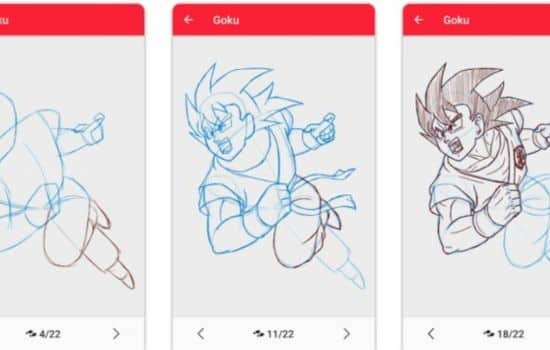
The foundation of any quality drawing app lies in its tutorial structure. Effective apps present instructions through clear visual demonstrations that users can follow at their own pace, pausing and replaying as needed.
These tutorials should cover fundamental concepts like:
- Basic shapes and how they form complex objects
- Proportion and measurement techniques
- Light source identification and shadow casting
- Perspective principles for depth creation
- Line weight variation for visual interest
- Texture representation methods
Progressive Difficulty Levels
Quality apps organize content from absolute beginner exercises to advanced artistic challenges. This scaffolded approach ensures users don’t feel overwhelmed while still providing clear paths toward skill advancement.
Beginners might start with simple geometric objects, gradually progressing to organic forms, then animals, landscapes, and eventually complex compositions with multiple elements and sophisticated techniques.
Interactive Practice Exercises
Passive consumption of tutorials rarely produces lasting skill development. The best apps incorporate interactive elements where users actively draw within the application, receiving immediate feedback on their technique.
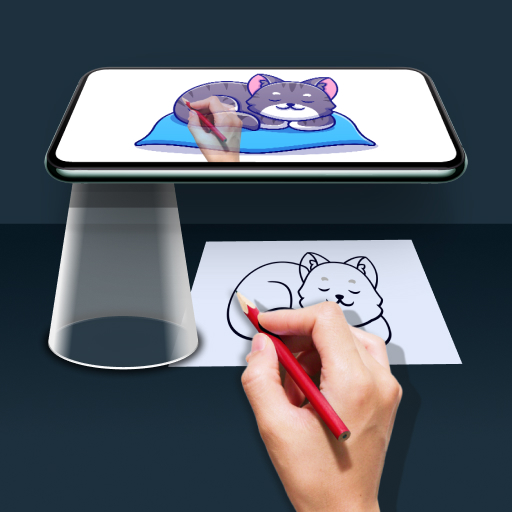
Some platforms use overlay technology, allowing learners to trace reference images while developing muscle memory. Others employ AI-powered assessment tools that analyze submitted drawings and provide constructive suggestions.
🖌️ Different Drawing Styles You Can Master Through Apps
Drawing encompasses numerous styles and techniques, each with distinct characteristics and applications. Comprehensive learning apps expose users to multiple artistic approaches, helping them discover personal preferences while building versatile skills.
Realistic Drawing Techniques
Realism focuses on accurately representing subjects as they appear in the physical world. This style demands careful attention to proportion, shading, texture, and perspective. Apps teaching realistic drawing typically emphasize observational skills and technical precision.
Students learn to analyze light behavior, understand anatomical structures, and develop patience for detailed work. While challenging, realistic drawing provides an excellent foundation for all other styles.
Cartoon and Character Design
Cartoon styles prioritize expressive simplification over realistic accuracy. These approaches teach important skills like exaggeration for emotional impact, appealing character proportions, and dynamic pose creation.
Many apps dedicate entire sections to character design, covering facial expressions, body language, costume creation, and consistent character maintenance across multiple drawings.
Manga and Anime Illustration
Given the global popularity of Japanese animation and comics, many drawing apps include dedicated manga and anime curriculum. These lessons focus on distinctive stylistic elements like large expressive eyes, dynamic hair rendering, and specific proportion conventions.
Users learn panel composition for storytelling, action line usage for movement suggestion, and screen tone application for shading effects common in manga artwork.
Sketch and Line Art
Some artists prefer the immediate, energetic quality of sketch-based work. Apps teaching this approach emphasize gestural drawing, confident line placement, and capturing essential forms without excessive detail.
This style proves particularly valuable for concept development, quick visual communication, and developing drawing speed alongside accuracy.
📱 How to Maximize Your Learning Experience With Drawing Apps
Simply downloading an app won’t automatically transform you into an accomplished artist. Success requires strategic approach, consistent practice, and proper mindset cultivation.
Establish a Regular Practice Schedule
Skill development in drawing, like any complex ability, benefits enormously from consistent practice rather than occasional marathon sessions. Even fifteen minutes daily produces superior results compared to sporadic longer sessions.
Drawing apps facilitate this consistency by offering bite-sized lessons perfect for brief practice periods. Set specific times when drawing becomes part of your routine, just like brushing teeth or morning coffee.
Complete Lessons Sequentially
While the temptation to skip ahead to advanced topics exists, resist this impulse. App developers carefully structure lesson progressions to build skills systematically. Each lesson provides foundational knowledge required for subsequent material.
Rushing through basics leaves gaps in understanding that ultimately limit advanced technique mastery. Trust the process and complete each lesson before advancing.
Practice Beyond the App
While apps provide excellent structured instruction, complementary freehand practice solidifies learned techniques. Keep a sketchbook for experimental drawing, applying lessons to self-selected subjects that interest you personally.
This application of guided learning to independent creative work bridges the gap between following instructions and developing genuine artistic voice.
Engage With Community Features
Many drawing apps include social elements—galleries for sharing work, forums for questions, and challenge events. Participating in these communities provides motivation, constructive feedback, and inspiration from fellow learners at various skill levels.
Seeing others’ progress reminds you that skill development is a journey everyone undertakes at their own pace, reducing discouragement during challenging phases.
🌟 Benefits That Extend Beyond Drawing Skills
Learning to draw through dedicated apps offers advantages that transcend artistic ability alone. The cognitive, emotional, and practical benefits impact multiple life areas.
Enhanced Observational Capabilities
Drawing training fundamentally changes how you perceive the visual world. Artists learn to notice subtle details, recognize underlying structures, and understand spatial relationships that most people overlook.
This heightened awareness proves valuable in numerous contexts—problem-solving, design thinking, memory enhancement, and even interpersonal communication through improved attention to facial expressions and body language.
Stress Reduction and Mindfulness
The focused concentration required for drawing creates a meditative state similar to formal mindfulness practices. When absorbed in creating artwork, anxiety-producing thoughts naturally diminish as attention shifts to immediate creative challenges.
Many users report that regular drawing sessions significantly improve overall stress management and emotional regulation, providing healthy outlets for processing complex feelings.
Boosted Creative Confidence
Successfully developing drawing skills builds self-efficacy that transfers to other domains. Overcoming the “I can’t draw” limiting belief demonstrates that perceived innate talents are often merely undeveloped skills.
This realization encourages experimentation in other areas where fear of failure previously created avoidance, fostering growth mindset and lifelong learning orientation.
Practical Professional Applications
Drawing skills enhance numerous career paths beyond professional artistry. Architects, designers, educators, engineers, marketers, and countless other professionals benefit from visual communication abilities.
Even basic sketching competency facilitates idea communication during brainstorming sessions, enhances presentation materials, and enables quick concept visualization that verbal descriptions cannot match.
🎯 Choosing the Right Drawing App for Your Specific Goals
The digital marketplace offers numerous drawing education apps, each with distinct strengths. Selecting the optimal platform requires understanding your personal objectives and learning preferences.
Considerations for Complete Beginners
If you’ve never drawn seriously before, prioritize apps emphasizing foundational skills with encouraging, patient instruction. Look for platforms offering extensive beginner content rather than those assuming existing knowledge.
User interface simplicity matters significantly for newcomers. Overly complex tools and navigation create unnecessary barriers that distract from learning core drawing concepts.
Options for Intermediate Artists
Those with basic competency seek apps providing advanced technique instruction, style-specific lessons, and challenges that push skill boundaries without excessive hand-holding.
Intermediate learners benefit from platforms offering community feedback features, allowing skilled peers to provide constructive criticism beyond automated assessment tools.
Features for Specialized Interests
Artists pursuing specific niches—wildlife illustration, portrait work, architectural rendering, fashion design—should seek apps with dedicated content in their areas of interest rather than general drawing platforms.
Specialized apps provide depth that generalist platforms cannot match, covering industry-specific techniques, tools, and conventions essential for professional-level work in particular fields.
💡 Common Challenges and How to Overcome Them
Every learner encounters obstacles during artistic development. Understanding common difficulties and effective solutions prevents discouragement and accelerates progress.
The Comparison Trap
Social media exposure to professional artwork can create unrealistic expectations and discouragement. Remember that impressive pieces represent years of practice, often by individuals who’ve dedicated careers to their craft.
Focus on personal progress rather than external comparisons. Review your own work from weeks or months prior to recognize genuine improvement that daily incremental changes obscure.
Perfectionism Paralysis
Many beginners abandon drawing when initial attempts don’t match mental ideals. This perfectionism paradoxically prevents the practice necessary for improvement.
Embrace imperfect practice. Every “bad” drawing teaches valuable lessons about what didn’t work, informing future attempts. Quantity of practice produces quality results over time.
Motivation Fluctuations
Initial enthusiasm naturally wanes as novelty fades and skill plateaus emerge. Apps combat this through gamification elements—achievement badges, streak tracking, and progressive unlocks—that provide external motivation during intrinsic motivation dips.
Additionally, varying subject matter and techniques prevents monotony. If portrait practice feels stale, switch to landscapes or abstract compositions to maintain engagement.
🚀 Advanced Techniques Accessible Through App-Based Learning
Beyond fundamental skills, comprehensive drawing apps introduce sophisticated techniques that distinguish competent artists from truly exceptional ones.
Color Theory and Application
Understanding color relationships, temperature, saturation, and psychological impact transforms artwork from technically correct to emotionally resonant. Advanced apps include comprehensive color instruction applicable to both digital and traditional media.
Lessons cover complementary schemes, analogous harmonies, value contrast, and strategic color limitation for visual impact maximization.
Composition and Visual Flow
Technical drawing accuracy means little without effective composition guiding viewer attention. Advanced instruction addresses rule of thirds application, leading lines creation, balance types, and deliberate rule-breaking for artistic effect.
These principles separate random arrangements from intentional, powerful visual statements that communicate beyond mere subject representation.
Digital-Specific Techniques
For users drawing directly within apps rather than learning for traditional media translation, digital-specific techniques become relevant—layer management, blending modes, custom brush creation, and non-destructive editing workflows.
These skills enable efficient, professional-quality digital artwork creation suitable for commercial applications, personal projects, or online sharing.
🌈 The Future of Drawing Education Through Technology
Current drawing apps represent merely the beginning of technology-enhanced art education. Emerging developments promise even more effective, personalized learning experiences.
Artificial Intelligence Integration
AI-powered analysis tools increasingly provide sophisticated feedback on submitted artwork, identifying specific improvement areas with precision human instructors require extensive time to deliver.
Future iterations may offer real-time correction suggestions during drawing sessions, adaptive curriculum that responds to individual learning patterns, and generative examples customized to personal interests.
Augmented Reality Applications
AR technology enables innovative learning approaches—projecting reference images into physical space for three-dimensional understanding, overlaying instructional guidance onto real-world subjects, and creating immersive drawing environments that blend digital assistance with traditional media.
Community and Collaboration Features
Social learning dimensions continue expanding, with apps facilitating mentorship connections, collaborative projects, live streaming instruction, and challenge events that build supportive artistic communities transcending geographic limitations.
🎨 Transforming Passion Into Proficiency
The journey from curious beginner to confident artist no longer requires expensive classes, formal instruction, or natural talent mythology. Drawing apps democratize artistic education, placing comprehensive, structured lessons in everyone’s pocket.
Success requires only three elements: quality instructional resources, consistent practice commitment, and patience with the gradual skill development process. Modern apps provide the first element; the remaining two depend entirely on you.
Every artist whose work you admire began exactly where you are now—uncertain, inexperienced, but curious. The difference between those who eventually create impressive artwork and those who don’t isn’t innate ability but simple persistence through the challenging early stages.
Drawing apps remove traditional barriers, making that persistence easier and more enjoyable than ever before. The question isn’t whether you can learn to draw, but whether you’ll commit to discovering the artist already within you, waiting for expression.
Start with a single lesson today. Follow the guided instruction without judgment. Complete one exercise. Then another. Before you realize it, you’ll have developed capabilities that once seemed impossibly distant, all through the accessible, encouraging guidance of a thoughtfully designed learning app.
Your artistic journey awaits, and it begins with a simple decision to try. Download an app, pick up a pencil or stylus, and discover the profound satisfaction of creating something beautiful with your own hands. The transformation from “I can’t draw” to “Look what I created” is one of life’s most rewarding experiences—and it’s more achievable now than at any point in human history.
