
Anúncios
Modular construction is revolutionizing the building industry by combining efficiency, sustainability, and innovation to create structures that minimize environmental impact while maximizing quality.
🏗️ Understanding the Modular Construction Revolution
The construction industry stands at a critical crossroads. Traditional building methods consume enormous amounts of resources, generate substantial waste, and contribute significantly to global carbon emissions. Modular construction presents a compelling alternative that addresses these environmental challenges while delivering superior results.
Anúncios
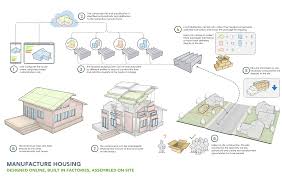
Modular construction involves fabricating building components or entire modules in a controlled factory environment before transporting them to the construction site for assembly. This method fundamentally changes how we approach building, shifting much of the construction process from unpredictable outdoor environments to precision-controlled facilities.
The environmental benefits of this approach extend far beyond simple waste reduction. By reimagining the entire construction process, modular building techniques create opportunities for sustainability at every stage, from material sourcing through final assembly and even eventual deconstruction.
Anúncios
♻️ Dramatic Waste Reduction Through Precision Manufacturing
One of the most compelling advantages of modular construction is its ability to minimize construction waste dramatically. Traditional construction sites typically generate between 25-40% waste, with materials ending up in landfills due to cutting errors, weather damage, theft, and over-ordering.
Modular construction reduces waste by up to 90% compared to conventional methods. This remarkable achievement stems from several factors that make factory-based construction inherently more efficient than on-site building.
Factory Efficiency and Material Optimization
In controlled factory settings, materials are measured, cut, and assembled with computer-aided precision. Advanced software optimizes material usage, ensuring every piece of lumber, drywall, or insulation serves a purpose. Leftover materials from one module immediately become inputs for the next, creating a circular production process that minimizes waste.
Weather protection in factory environments prevents material damage that commonly occurs on outdoor construction sites. Rain-soaked lumber, rusted metal components, and damaged insulation represent significant waste sources in traditional construction—problems entirely eliminated through indoor manufacturing.
Bulk purchasing for continuous production runs allows modular manufacturers to order exact quantities needed, reducing the over-ordering common in traditional construction where contractors buy extra materials “just in case.”
🌍 Lower Carbon Footprint Across the Building Lifecycle
The environmental benefits of modular construction extend well beyond waste reduction. The entire carbon footprint of building projects decreases substantially when modular methods are employed.
Transportation efficiency improves dramatically because materials are delivered directly to centralized factories rather than individual construction sites. This consolidation reduces the number of delivery trucks, lowers fuel consumption, and decreases traffic congestion in residential areas.
Energy Consumption During Construction
Modular construction typically requires 50-70% less energy than traditional building methods. Factory environments optimize energy use through efficient lighting, climate control, and machinery operation that runs continuously rather than intermittently.
The shortened construction timeline also contributes to energy savings. While traditional buildings might take 12-18 months to complete, modular structures can be finished in 3-6 months. This acceleration reduces the extended energy consumption associated with prolonged construction activities.
Site preparation and foundation work proceed simultaneously with module fabrication, further compressing timelines and reducing the overall energy investment required to complete projects.
🔧 Enhanced Quality Control for Long-Term Sustainability
Sustainability extends beyond construction to encompass a building’s entire operational life. Modular construction delivers superior quality control that translates into better-performing, longer-lasting structures requiring less maintenance and fewer repairs.
Factory construction allows for rigorous quality inspections at every production stage. Each module undergoes multiple checkpoints before leaving the facility, ensuring all components meet or exceed building codes and performance standards.
Improved Building Envelope Performance
The building envelope—walls, roof, windows, and doors—determines energy efficiency more than any other factor. Modular construction excels at creating tight, well-insulated building envelopes because precision manufacturing eliminates gaps and ensures proper insulation installation.
Traditional construction often suffers from inconsistent insulation installation, air leakage, and thermal bridges that compromise energy efficiency. Factory-built modules avoid these problems through standardized processes and quality verification before shipment.
This superior envelope performance translates directly into reduced heating and cooling costs throughout the building’s operational life, delivering both environmental benefits and economic savings for occupants.
💧 Water Conservation and Pollution Prevention
Water represents another critical resource where modular construction demonstrates clear environmental advantages. Traditional construction sites consume enormous water quantities for concrete mixing, dust control, equipment cleaning, and worker facilities.
Modular factories implement water recycling systems that capture, filter, and reuse water throughout the manufacturing process. This closed-loop approach reduces water consumption by up to 80% compared to conventional construction.
Site disturbance also decreases substantially with modular construction. Traditional projects clear large areas, disturb soil, and create conditions for erosion and sediment runoff that pollutes waterways. Modular construction minimizes site disturbance, preserving natural drainage patterns and reducing pollution risk.
🌱 Material Innovation and Sustainable Sourcing
The controlled environment of modular construction facilities enables use of innovative, eco-friendly materials that might prove impractical on traditional construction sites. Manufacturers can work with sustainable materials requiring special handling or specific environmental conditions.
Recycled and Renewable Materials
Many modular manufacturers prioritize recycled steel, reclaimed wood, recycled plastic composites, and other sustainable materials in their production processes. The factory setting makes it easier to source, store, and incorporate these materials consistently.
Engineered wood products made from fast-growing, sustainably harvested timber offer strength comparable to traditional lumber while reducing pressure on old-growth forests. Cross-laminated timber (CLT) and laminated veneer lumber (LVL) exemplify materials that modular construction has helped popularize.
Bio-based insulation materials, including sheep’s wool, hemp fiber, and recycled denim, provide excellent thermal performance without the environmental concerns associated with conventional insulation products.
⚡ Design Flexibility Meets Environmental Responsibility
A common misconception holds that modular construction limits design creativity. The reality proves quite different—modular building offers extensive design flexibility while maintaining environmental benefits.
Modern modular construction accommodates diverse architectural styles, from contemporary urban dwellings to traditional residential designs. The key lies in planning modules that can be combined and configured in multiple ways.
Adaptive Reuse and Future Modifications
True sustainability considers a building’s entire lifecycle, including eventual modification or repurposing. Modular construction excels in this regard because modules can be reconfigured, expanded, reduced, or completely relocated as needs change.
Traditional buildings demolished at the end of their useful life send massive amounts of material to landfills. Modular buildings can be disassembled, with modules refurbished and reused in new projects, dramatically reducing demolition waste.
This adaptability extends the effective lifespan of building materials and reduces the environmental impact associated with new construction when changing needs arise.
📊 Economic Benefits Supporting Environmental Goals
Environmental sustainability and economic viability reinforce each other in modular construction. The cost savings inherent in modular building make sustainable construction accessible to broader markets.
Labor efficiency improves dramatically in factory settings where workers operate in comfortable, safe environments with all tools and materials readily available. This efficiency translates into lower labor costs, making sustainable building methods more economically competitive.
Reduced Project Risk and Uncertainty
Weather delays, material shortages, and coordination problems plague traditional construction projects, adding costs and extending timelines. Modular construction minimizes these risks, providing greater cost certainty and predictable completion schedules.
The financial predictability of modular projects makes it easier to budget for premium sustainable features and materials. When core construction costs remain controlled, allocating resources toward environmental enhancements becomes more feasible.
🏘️ Scalability for Sustainable Development Projects
The efficiency of modular construction makes it particularly valuable for large-scale development projects where environmental impact multiplies across numerous buildings. Multi-family housing, student accommodation, hotels, and workforce housing benefit substantially from modular approaches.
Economies of scale amplify environmental benefits when producing multiple similar modules. Material efficiency improves, waste decreases further, and the carbon footprint per unit drops as production volume increases.
Addressing Housing Shortages Sustainably
Many regions face critical affordable housing shortages. Modular construction offers a path to address these needs without compromising environmental standards. The speed, efficiency, and cost-effectiveness of modular building enable rapid deployment of sustainable housing solutions.
Disaster recovery and emergency housing also benefit from modular construction’s rapid deployment capabilities. When communities need shelter quickly, modular buildings provide humane, comfortable, and environmentally responsible solutions far superior to temporary structures.
🔬 Technological Integration Advancing Sustainability
Modular construction naturally integrates with advanced technologies that enhance environmental performance. Building Information Modeling (BIM), IoT sensors, and smart building systems work seamlessly with factory-built structures.
BIM technology optimizes every aspect of module design, identifying potential inefficiencies before production begins. This digital planning reduces material waste, improves energy performance, and ensures all building systems integrate properly.
Smart home and building automation systems install more easily during factory construction than through retrofitting. These systems optimize energy use, monitor performance, and provide data that helps building operators minimize environmental impact throughout the operational phase.
🌟 Overcoming Challenges and Misconceptions
Despite clear advantages, modular construction faces perception challenges and practical obstacles that slow adoption. Understanding and addressing these concerns helps advance sustainable building practices.
Aesthetic concerns often arise, with some perceiving modular buildings as bland or institutional. Modern modular construction dispels this myth, delivering architecturally distinguished buildings indistinguishable from traditionally constructed structures.
Regulatory and Financing Considerations
Building codes and zoning regulations sometimes lag behind modular construction innovations, creating approval challenges. However, as modular construction becomes more prevalent, regulatory frameworks increasingly accommodate these methods.
Financing can present obstacles because some lenders remain unfamiliar with modular construction processes and timelines. Education and demonstrated success stories are gradually overcoming this barrier, opening access to construction financing for modular projects.
🚀 The Future of Sustainable Building
As environmental concerns intensify and sustainable building practices become essential rather than optional, modular construction stands positioned to transform the industry fundamentally. The convergence of environmental necessity, technological advancement, and economic advantage creates powerful momentum.
Emerging innovations promise to enhance modular construction’s environmental benefits further. Three-dimensional printing, advanced composite materials, and carbon-negative building products will integrate naturally into factory-based construction processes.
Net-zero energy buildings become more achievable through modular construction’s superior quality control and efficient building envelopes. As renewable energy costs decline, factory-built structures increasingly incorporate integrated solar panels, battery storage, and other technologies that eliminate operational carbon emissions.
🌈 Building a Sustainable Legacy
The construction industry bears responsibility for significant environmental impact, but it also holds potential for substantial positive change. Modular construction represents more than just an alternative building method—it embodies a fundamental shift toward sustainable, efficient, and responsible development.
Every building constructed using modular methods demonstrates that environmental sustainability and practical functionality need not conflict. These structures prove that we can build smarter, waste less, and create spaces that serve human needs while respecting planetary boundaries.
The transition toward sustainable building practices requires commitment from developers, architects, contractors, policymakers, and communities. Modular construction provides the tools and methods to make this transition achievable, economically viable, and environmentally effective.
As awareness grows and adoption accelerates, modular construction will increasingly define sustainable building standards. The question is no longer whether modular methods can deliver environmental benefits—the evidence overwhelmingly confirms they can. The question now is how quickly the industry can scale these practices to meet the urgent need for sustainable development worldwide.
Building smarter and wasting less isn’t just an aspiration—through modular construction, it’s an achievable reality that’s transforming the built environment one factory-produced module at a time.
