
Anúncios
Artificial intelligence is transforming how architects design buildings, merging cutting-edge technology with environmental responsibility to create structures that benefit both people and planet.
🌱 The Dawn of Intelligent Green Architecture
The construction industry stands at a critical crossroads. Buildings account for nearly 40% of global energy consumption and contribute significantly to greenhouse gas emissions. Traditional architectural design processes, while refined over centuries, often fall short in addressing the complex environmental challenges we face today. Enter artificial intelligence—a game-changing force that’s reshaping how we conceptualize, design, and construct sustainable buildings.
Anúncios
AI-powered architectural design isn’t science fiction anymore. It’s happening in design studios, construction sites, and urban planning offices worldwide. From optimizing energy efficiency to predicting building performance decades into the future, machine learning algorithms are becoming indispensable tools for architects committed to environmental stewardship.
Understanding AI’s Role in Sustainable Design
Artificial intelligence in architecture extends far beyond simple automation. These sophisticated systems analyze vast datasets encompassing climate patterns, material properties, energy consumption metrics, and human behavior patterns to generate design solutions that would take human designers months or years to develop.
Anúncios
Machine learning algorithms can process building information modeling (BIM) data alongside environmental variables to suggest optimal building orientations, window placements, and material selections. This computational power enables architects to explore thousands of design iterations in hours, identifying solutions that maximize sustainability while meeting aesthetic and functional requirements.
Predictive Analytics for Long-Term Sustainability
One of AI’s most valuable contributions is its predictive capability. Advanced algorithms can forecast how a building will perform over its entire lifecycle, considering factors like climate change projections, material degradation, and evolving energy costs. This foresight allows designers to make informed decisions that ensure structures remain sustainable for decades, not just at the moment of completion.
🏗️ Optimizing Energy Performance Through Machine Learning
Energy efficiency remains the cornerstone of sustainable architecture, and AI excels at optimization problems. Neural networks trained on vast databases of building performance data can identify energy-saving opportunities that human designers might overlook.
These systems analyze countless variables simultaneously—solar exposure, thermal mass, ventilation patterns, occupancy schedules, and local climate data—to recommend design modifications that dramatically reduce energy consumption. Some AI platforms have demonstrated the ability to reduce building energy use by 20-40% compared to conventional design approaches.
Smart HVAC System Integration
Heating, ventilation, and air conditioning systems represent major energy consumers in most buildings. AI algorithms can design HVAC systems that adapt in real-time to occupancy patterns, weather conditions, and energy costs. By learning from building usage patterns, these intelligent systems continuously optimize performance, reducing waste while maintaining comfort.
The integration doesn’t stop at design. AI-powered building management systems continue learning throughout the building’s operational life, making micro-adjustments that compound into substantial energy savings over time. This continuous optimization represents a fundamental shift from static design to dynamic, responsive architecture.
Material Selection and Lifecycle Assessment
Choosing sustainable materials involves weighing complex trade-offs between embodied carbon, durability, recyclability, cost, and performance characteristics. AI excels at this multidimensional analysis, rapidly evaluating material combinations against sustainability criteria.
Machine learning models trained on lifecycle assessment databases can predict the environmental impact of material choices across a building’s entire lifespan. These tools help architects select materials that minimize carbon footprint while meeting structural and aesthetic requirements.
Innovative Bio-Based Materials Discovery
AI is accelerating the discovery and application of innovative sustainable materials. Algorithms can identify promising bio-based alternatives to conventional construction materials by analyzing molecular structures, predicting performance characteristics, and suggesting optimal applications. This computational approach has already contributed to the development of carbon-negative concrete formulations and high-performance timber composites.
🌍 Climate-Responsive Design Generation
Every building site presents unique climate challenges and opportunities. AI systems can analyze microclimate data to generate designs specifically optimized for local conditions, creating buildings that work with nature rather than against it.
Generative design algorithms explore thousands of building configurations, evaluating each against climate-specific performance criteria. The result is architecture that responds intelligently to local temperature ranges, precipitation patterns, solar angles, and prevailing winds.
Passive Design Strategy Optimization
Passive design strategies—using building orientation, shading, natural ventilation, and thermal mass to regulate temperature without mechanical systems—are fundamental to sustainable architecture. AI can optimize these strategies with unprecedented precision.
Computational fluid dynamics simulations powered by machine learning reveal exactly how air will move through proposed designs. Solar analysis algorithms calculate precise shading requirements for every window at different times of year. This level of detail enables architects to maximize passive performance, reducing or eliminating the need for energy-intensive mechanical systems.
Urban Planning and Community-Scale Sustainability
AI’s impact extends beyond individual buildings to entire neighborhoods and cities. Urban planning algorithms can optimize development patterns to minimize environmental impact while maximizing livability and resource efficiency.
These systems analyze transportation networks, green space distribution, energy infrastructure, water systems, and countless other urban variables to recommend development strategies that support sustainable growth. By modeling different scenarios, AI helps planners understand the long-term consequences of development decisions.
District Energy System Optimization
AI enables sophisticated district-level energy systems where buildings share heating, cooling, and power generation resources. Machine learning algorithms coordinate energy production and consumption across multiple buildings, dramatically improving efficiency compared to individual building systems. These smart grids can integrate renewable energy sources, battery storage, and demand response strategies into cohesive, optimized networks.
💡 Real-Time Performance Monitoring and Adaptation
Sustainability doesn’t end when construction completes. AI-powered monitoring systems track building performance in real-time, identifying inefficiencies and recommending corrective actions.
Sensor networks throughout buildings feed data to machine learning algorithms that detect anomalies, predict maintenance needs, and suggest operational adjustments. This proactive approach prevents small issues from becoming major problems while continuously optimizing energy use.
Occupant Behavior Integration
Buildings don’t operate in isolation—they respond to human behavior. AI systems that learn occupant patterns can adjust building systems to match actual usage rather than theoretical assumptions. This personalization improves both sustainability and comfort, as buildings adapt to the specific needs of their users.
Addressing Implementation Challenges
Despite its tremendous potential, AI integration in sustainable architecture faces real challenges. The technology requires significant computational resources and specialized expertise. Data quality and availability can limit algorithm effectiveness, particularly for innovative design approaches lacking historical performance data.
There’s also the risk of over-reliance on algorithmic recommendations. AI should augment human creativity and judgment, not replace it. The most successful sustainable designs emerge from collaboration between human architects and artificial intelligence, combining computational power with human intuition, creativity, and understanding of social context.
Democratizing Access to AI Tools
Making AI-powered sustainable design tools accessible to smaller firms and developing regions remains crucial. Cloud-based platforms and open-source initiatives are helping democratize access, but significant barriers remain. Addressing these disparities will be essential for AI to fulfill its potential in advancing global sustainability.
🚀 Emerging Innovations on the Horizon
The intersection of AI and sustainable architecture continues evolving rapidly. Several emerging technologies promise to further revolutionize the field in coming years.
Digital twins—virtual replicas of physical buildings that update in real-time—combined with AI create powerful platforms for testing sustainability improvements before implementing them in actual buildings. These virtual laboratories enable risk-free experimentation and continuous optimization.
Autonomous Construction Robotics
AI-guided construction robots can build with precision impossible for human workers, reducing material waste and enabling complex sustainable designs that would be prohibitively expensive with conventional construction methods. These systems promise to make cutting-edge sustainable architecture more accessible and affordable.
Biomimetic Design Algorithms
Nature has refined sustainable design principles over billions of years. AI algorithms that learn from biological systems—how termite mounds regulate temperature, how leaves capture sunlight, how ecosystems manage resources—are generating revolutionary architectural solutions inspired by natural efficiency.
The Human Element in AI-Driven Design
Technology alone cannot create truly sustainable architecture. The most successful AI implementations maintain human designers at the center of the creative process, using algorithms as powerful tools rather than autonomous decision-makers.
Architects bring irreplaceable qualities to sustainable design—understanding of cultural context, aesthetic sensibility, empathy for human needs, and ethical judgment. AI handles computational complexity and data analysis, freeing human designers to focus on these higher-order concerns.
This partnership model, where human creativity and machine intelligence complement each other, represents the optimal path forward. It combines the best of both approaches, generating sustainable buildings that are not only environmentally responsible but also beautiful, functional, and meaningful.
🌟 Transforming Practice and Education
As AI becomes integral to sustainable design, architectural education and professional practice are adapting. Leading architecture schools now incorporate computational design, data science, and AI fundamentals into curricula alongside traditional design skills.
Professional development programs help practicing architects develop AI literacy, enabling them to effectively collaborate with data scientists and leverage algorithmic tools. This interdisciplinary approach is essential for maximizing AI’s potential in advancing sustainability.
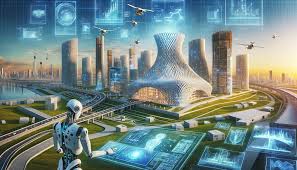
Building Momentum Toward a Sustainable Future
The convergence of artificial intelligence and sustainable architecture represents more than technological progress—it’s a fundamental shift in how we conceive of buildings and their relationship to the environment. AI provides tools to address the urgent climate crisis with unprecedented effectiveness, enabling designs that dramatically reduce environmental impact while improving quality of life.
Success requires continued innovation, but also widespread adoption and commitment to sustainability as a core design principle. As AI tools become more powerful and accessible, their impact will multiply, transforming the built environment from a major contributor to environmental problems into a key part of the solution.
The buildings we design today will shape the world for generations. By harnessing artificial intelligence in service of sustainability, architects are creating structures that don’t just minimize harm but actively contribute to environmental restoration and human flourishing. This vision of architecture—intelligent, responsive, and regenerative—offers genuine hope for building a greener tomorrow.
The revolution is underway, driven by algorithms and data but guided by human values and aspirations. Every sustainable building designed with AI assistance represents a step toward a future where technology and nature work in harmony, where human shelter enhances rather than degrades the environment. That future isn’t distant speculation—it’s being built right now, one intelligently designed structure at a time.
