
Anúncios
Green hydrogen is emerging as a game-changing solution for sustainable transportation, offering zero-emission mobility that could transform how we travel and transport goods globally.
🌍 Understanding Green Hydrogen: The Clean Energy Revolution
The transportation sector accounts for nearly 25% of global carbon dioxide emissions, making it one of the most significant contributors to climate change. As the world races toward carbon neutrality, green hydrogen has emerged as a promising alternative fuel that could revolutionize how we power vehicles, ships, trains, and aircraft. Unlike traditional fossil fuels or even conventional hydrogen production methods, green hydrogen is produced through electrolysis powered by renewable energy sources such as solar, wind, or hydroelectric power.
Anúncios
This remarkable energy carrier contains no carbon molecules, meaning its only byproduct when used in fuel cells is pure water vapor. The potential impact of widespread green hydrogen adoption extends far beyond environmental benefits—it represents a complete transformation of our energy infrastructure, economic systems, and industrial processes. Countries worldwide are investing billions of dollars into hydrogen technology, recognizing that early adopters will gain significant competitive advantages in the emerging clean energy economy.
⚡ How Green Hydrogen Powers Tomorrow’s Transportation
The mechanics behind green hydrogen transportation are elegantly simple yet technologically sophisticated. When renewable electricity passes through water in an electrolyzer, it separates hydrogen and oxygen molecules. The resulting hydrogen can then be compressed, stored, and transported to fueling stations where vehicles equipped with fuel cells convert it back into electricity to power electric motors.
Anúncios
This process offers several advantages over battery-electric vehicles, particularly for heavy-duty applications. Hydrogen fuel cells provide longer range capabilities, faster refueling times—comparable to conventional gasoline vehicles—and maintain performance in extreme weather conditions where batteries often struggle. The energy density of hydrogen makes it especially suitable for long-haul trucking, maritime shipping, and aviation, where battery weight becomes prohibitive.
Key Components of Hydrogen-Powered Vehicles
- Fuel Cell Stack: Converts hydrogen into electricity through an electrochemical reaction
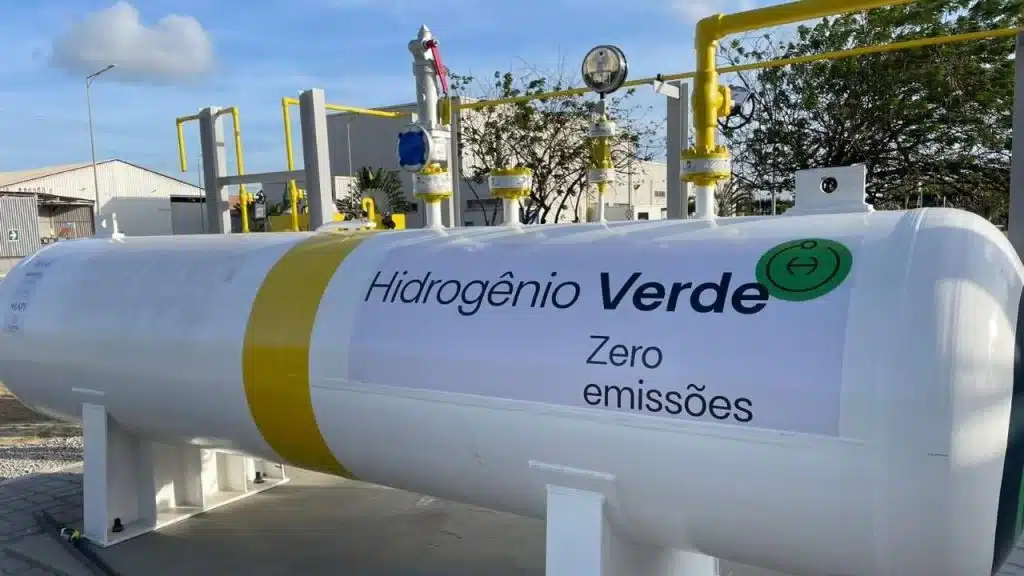
- Hydrogen Storage Tanks: High-pressure vessels that safely contain compressed hydrogen
- Electric Motor: Powered by electricity generated from the fuel cell
- Battery Buffer: Small battery that captures regenerative braking energy and provides power during acceleration
- Power Control Unit: Manages energy flow between components
🚛 Heavy-Duty Transportation: Where Hydrogen Shines Brightest
While battery-electric vehicles have gained significant traction in passenger car markets, green hydrogen demonstrates its greatest potential in heavy-duty transportation sectors. Long-haul trucking companies face enormous challenges transitioning to zero-emission technologies because battery weight significantly reduces cargo capacity and charging times disrupt delivery schedules.
Hydrogen fuel cell trucks can travel 500-800 kilometers on a single tank, refuel in approximately 15 minutes, and carry the same payload as diesel trucks. Major manufacturers including Hyundai, Nikola, and Daimler have already deployed hydrogen trucks in pilot programs across Europe, Asia, and North America. These vehicles are proving their capability to meet demanding commercial requirements while eliminating tailpipe emissions entirely.
The maritime shipping industry, responsible for moving 90% of global trade, faces particularly stringent decarbonization pressures. Green hydrogen and its derivatives—such as green ammonia and methanol—offer viable pathways to zero-emission shipping. Several pioneering vessels are currently under construction or already operational, demonstrating that hydrogen can power everything from harbor ferries to ocean-crossing cargo ships.
✈️ Aviation’s Hydrogen Horizon
Aviation presents perhaps the most challenging decarbonization puzzle in the transportation sector. Aircraft require extremely energy-dense fuels, and battery technology simply cannot provide sufficient power-to-weight ratios for commercial flight. Green hydrogen, however, offers a realistic pathway toward sustainable aviation.
Hydrogen can power aircraft through two primary methods: direct combustion in modified jet engines or conversion to electricity via fuel cells. Airbus has announced ambitious plans to bring hydrogen-powered commercial aircraft to market by 2035, with designs ranging from turboprop regional planes to wide-body jets capable of transcontinental flights.
Several aerospace companies and research institutions are developing hydrogen-electric propulsion systems for smaller aircraft, with some prototypes already completing successful test flights. While technical challenges remain—particularly regarding hydrogen storage at cryogenic temperatures and airport infrastructure—the aviation industry increasingly views green hydrogen as essential to achieving net-zero emissions by mid-century.
🚆 Rail Networks Embracing Hydrogen Technology
Rail transportation offers an ideal testing ground for hydrogen technology, particularly on non-electrified routes where diesel locomotives currently dominate. Hydrogen trains combine the environmental benefits of electric trains with the flexibility of diesel operations, eliminating the need for expensive overhead electrification infrastructure.
Germany pioneered commercial hydrogen train operations with the Coradia iLint, which has been successfully transporting passengers since 2018. These trains demonstrate comparable performance to diesel equivalents while producing zero local emissions and operating more quietly. Countries including France, Italy, Austria, and the United Kingdom have ordered hydrogen trains or announced plans to introduce them on regional routes.
The economic case for hydrogen rail strengthens on routes with lower traffic volumes, where electrification costs cannot be justified, and in mountainous regions where regenerative braking can be captured and stored efficiently.
💰 Economic Considerations and Cost Trajectories
Current green hydrogen production costs remain higher than conventional fossil fuels, presenting a significant barrier to widespread adoption. However, costs are declining rapidly as renewable energy becomes cheaper and electrolyzer technology improves through economies of scale and technological innovation.
| Year | Estimated Green H2 Cost ($/kg) | Diesel Equivalent ($/kg) |
|---|---|---|
| 2020 | $5.00-$6.50 | $1.80-$2.20 |
| 2025 | $3.00-$4.00 | $2.00-$2.40 |
| 2030 | $1.50-$2.50 | $2.20-$2.60 |
| 2040 | $1.00-$1.50 | $2.40-$3.00 |
Industry analysts project that green hydrogen could achieve cost parity with diesel fuel by 2030 in regions with abundant renewable energy resources. Government subsidies, carbon pricing mechanisms, and regulatory mandates are accelerating this timeline by creating favorable market conditions for early adopters and infrastructure investors.
The total cost of ownership calculation extends beyond fuel prices to include vehicle maintenance, which favors hydrogen fuel cell vehicles due to fewer moving parts compared to internal combustion engines. Fleet operators increasingly recognize that long-term operational savings can offset higher initial vehicle costs.
🏗️ Infrastructure Development: Building the Hydrogen Highway
Transitioning to hydrogen-powered transportation requires substantial infrastructure investment in production facilities, distribution networks, and refueling stations. Currently, the limited availability of hydrogen refueling stations constrains vehicle adoption, creating a classic chicken-and-egg problem that governments and private investors are working to resolve.
Strategic deployment of hydrogen corridors—routes with sufficient refueling infrastructure to support commercial operations—is accelerating adoption in key markets. Europe leads with over 200 public hydrogen stations, concentrated along major trucking routes. California maintains the largest network in North America, while China is rapidly expanding its hydrogen infrastructure as part of broader decarbonization initiatives.
Innovative business models are emerging to overcome infrastructure barriers. Some companies are deploying mobile hydrogen refueling units that can serve multiple locations, while others are developing on-site hydrogen production facilities that eliminate distribution challenges for fleet operators with centralized operations.
🌱 Environmental Impact Beyond Carbon Emissions
The environmental benefits of green hydrogen extend significantly beyond eliminating tailpipe carbon emissions. Hydrogen fuel cell vehicles produce no particulate matter, nitrogen oxides, or other air pollutants that contribute to urban air quality problems and respiratory health issues affecting millions of people globally.
Water consumption for hydrogen production through electrolysis is relatively modest—approximately 9 liters of purified water produces 1 kilogram of hydrogen, which can power a fuel cell vehicle for roughly 100 kilometers. This water is returned to the environment as vapor when the hydrogen is used, creating a closed loop cycle.
However, comprehensive lifecycle assessments must consider the environmental impact of renewable energy infrastructure, electrolyzer manufacturing, and hydrogen storage and transportation. When produced with truly renewable electricity and managed responsibly, green hydrogen demonstrates significantly lower overall environmental impact than fossil fuels across all metrics.
🚀 Innovation Driving the Hydrogen Future
Technological innovation continues accelerating across the hydrogen value chain, from production through end-use applications. Electrolyzer efficiency improvements are reducing the electricity required to produce hydrogen, while new catalyst materials are lowering costs and improving durability.
Storage technology advances are addressing one of hydrogen’s most significant challenges—its low volumetric energy density. Researchers are developing solid-state hydrogen storage materials that could enable safer, more compact storage systems. Liquid organic hydrogen carriers offer another promising approach, allowing hydrogen to be stored and transported in conventional fuel infrastructure before being released when needed.
Fuel cell technology is also evolving rapidly, with manufacturers achieving longer lifespans, higher power outputs, and reduced platinum requirements. Some next-generation fuel cells are exploring alternative catalyst materials that could further reduce costs while maintaining or improving performance.
🤝 Global Collaboration and Policy Frameworks
Successful hydrogen economy development requires unprecedented international collaboration. Countries are establishing bilateral and multilateral partnerships to share research, standardize regulations, and coordinate infrastructure development. The Hydrogen Council, a global coalition of leading energy, transport, and industry companies, facilitates knowledge exchange and advocates for supportive policies.
Government policies play a crucial role in accelerating hydrogen adoption through various mechanisms including production subsidies, tax incentives for hydrogen vehicles, mandates for zero-emission transportation, and investments in research and infrastructure. The European Union’s hydrogen strategy commits €430 billion toward building a comprehensive hydrogen economy by 2030, while similar initiatives are underway in Japan, South Korea, Australia, and many other nations.
Standardization of safety protocols, fueling interfaces, and quality specifications is essential for creating a truly global hydrogen market. International organizations are working to harmonize regulations, enabling vehicles and infrastructure to operate seamlessly across borders.
🔮 Envisioning Transportation’s Hydrogen-Powered Future
The convergence of technological maturity, declining costs, supportive policies, and urgent climate imperatives is creating an unprecedented opportunity for green hydrogen to transform transportation fundamentally. Within the next decade, hydrogen-powered vehicles could become commonplace on highways, in harbors, at airports, and along rail lines worldwide.
This transformation will ripple through economies, creating millions of jobs in manufacturing, infrastructure development, and operations while reducing dependence on fossil fuel imports and enhancing energy security. Communities currently suffering from transportation-related air pollution will breathe cleaner air, improving public health and quality of life.
The integration of hydrogen transportation with broader energy systems offers additional benefits. Hydrogen can serve as large-scale energy storage, capturing excess renewable electricity during periods of high production and releasing it when needed. This sector coupling enhances grid stability and maximizes renewable energy utilization.
Challenges certainly remain—technical hurdles to overcome, infrastructure to build, costs to reduce, and skeptics to convince. However, the momentum behind green hydrogen is undeniable and accelerating. Major corporations are committing substantial resources, governments are implementing ambitious policies, and technological breakthroughs continue emerging at an impressive pace.
🌟 Embracing the Hydrogen Revolution Today
The transition to green hydrogen transportation is not a distant dream but an unfolding reality. Early adopters in commercial fleets, public transportation, and specialized applications are already demonstrating that hydrogen technology works reliably and cost-effectively in real-world conditions.
For individuals, supporting hydrogen development means advocating for supportive policies, considering hydrogen vehicles when they become available in consumer markets, and educating others about this transformative technology. For businesses, especially those operating vehicle fleets, investigating hydrogen options and participating in pilot programs can provide competitive advantages while contributing to sustainability goals.
The power of green hydrogen lies not only in its technical capabilities but in its potential to unite environmental necessity with economic opportunity. As renewable energy becomes increasingly abundant and affordable, green hydrogen emerges as the perfect complement—enabling us to decarbonize the transportation sectors that batteries alone cannot address while creating prosperity and protecting our planet for future generations. The revolution is underway, and the journey toward sustainable transportation powered by green hydrogen promises to be transformative for humanity and the environment we all share.
