
Anúncios
Energy storage technology stands at the crossroads of innovation, promising to revolutionize how we capture, store, and distribute power across the globe. ⚡
The global energy landscape is undergoing a dramatic transformation. As renewable energy sources like solar and wind become increasingly cost-competitive, one critical challenge remains: how to store this intermittent energy effectively and deploy it when demand peaks. Energy storage breakthroughs are no longer just an engineering curiosity—they represent the cornerstone of our sustainable energy future, enabling unprecedented scalability that could reshape entire economies and combat climate change.
Anúncios
From grid-scale batteries to innovative thermal storage systems, the race to perfect energy storage has attracted billions in investment and spurred remarkable scientific advances. This technological revolution isn’t just about building bigger batteries; it’s about reimagining the entire energy ecosystem to create resilient, flexible, and sustainable power networks that can meet humanity’s growing energy demands while reducing our carbon footprint.
🔋 The Energy Storage Revolution: Why Now Matters
The urgency behind energy storage innovation has reached critical mass. Global renewable energy capacity has grown exponentially, with solar and wind installations breaking records year after year. However, the sun doesn’t always shine, and the wind doesn’t always blow when electricity demand peaks. This fundamental mismatch between renewable generation patterns and consumption needs creates what engineers call the “duck curve”—a growing challenge that threatens grid stability.
Anúncios
Energy storage acts as the missing link, capturing excess renewable energy during peak production hours and releasing it during periods of high demand or low generation. Without effective storage solutions, utilities must maintain expensive fossil fuel backup plants, undermining the economic and environmental benefits of renewable investments.
The market response has been extraordinary. Global energy storage deployments have increased by over 200% in recent years, with projections suggesting the market will exceed $500 billion by 2035. This explosive growth reflects not just environmental consciousness but hard economic reality—storage systems are becoming financially viable, opening new revenue streams through grid services, demand charge management, and energy arbitrage.
Lithium-Ion Batteries: The Current Champion
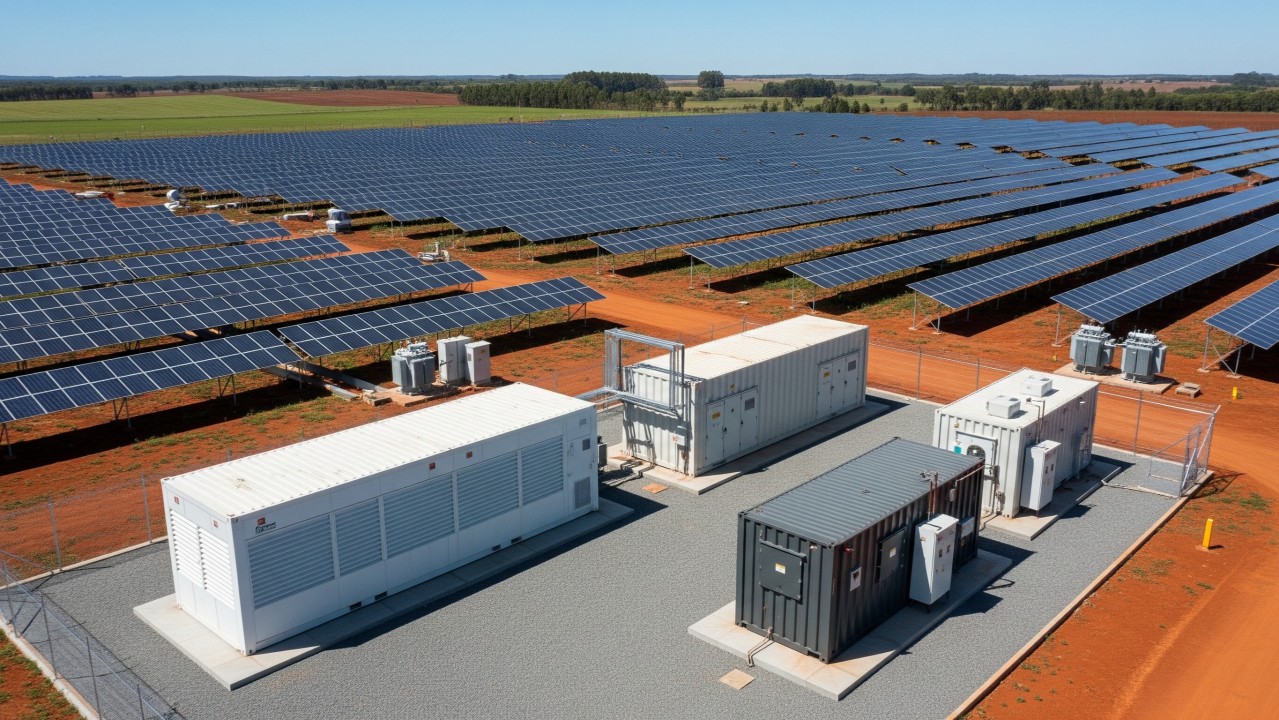
Lithium-ion technology currently dominates the energy storage landscape, accounting for approximately 90% of grid-scale battery installations. The same chemistry powering smartphones and electric vehicles has proven surprisingly scalable, with massive battery parks now operating from California to Australia, each capable of storing hundreds of megawatt-hours.
Several factors explain lithium-ion’s market dominance. Manufacturing scale has driven costs down by nearly 90% over the past decade, making projects economically attractive without subsidies. The technology offers excellent energy density, rapid response times measured in milliseconds, and increasingly long cycle life exceeding 10,000 charge-discharge cycles in some applications.
Major installations like the Hornsdale Power Reserve in South Australia have demonstrated real-world capabilities, stabilizing grid frequency, reducing electricity costs, and preventing blackouts. These successful deployments have transformed energy storage from experimental technology to proven infrastructure, accelerating adoption worldwide.
Breaking Through Limitations
Despite impressive achievements, lithium-ion faces inherent constraints. Raw material availability presents concerns—lithium, cobalt, and nickel deposits are geographically concentrated, creating potential supply chain vulnerabilities. Environmental impacts from mining operations and recycling challenges add complexity to sustainability claims.
Researchers are pursuing multiple pathways to address these limitations. Next-generation lithium-ion variants incorporate silicon anodes, solid-state electrolytes, and alternative cathode chemistries that promise higher energy densities and improved safety profiles. These incremental improvements could extend lithium-ion’s dominance for another decade while more radical alternatives mature.
🌊 Flow Batteries: Decoupling Energy and Power
Flow battery technology represents a fundamentally different approach to energy storage. Unlike conventional batteries where energy capacity and power output are linked, flow batteries separate these characteristics, storing energy in liquid electrolytes contained in external tanks while generating power through electrochemical reactions in a central cell stack.
This architecture offers unique advantages for grid-scale applications. Energy capacity scales simply by adding larger electrolyte tanks, while power output scales independently by increasing cell stack size. The design enables extremely long discharge durations—from hours to days—making flow batteries ideal for seasonal storage applications that lithium-ion cannot economically address.
Vanadium redox flow batteries have achieved commercial maturity, with installations operating in China, Japan, and North America. The technology offers essentially unlimited cycle life, as the electrolyte doesn’t degrade through charge-discharge cycles, and complete non-flammability eliminates fire risks that plague lithium-ion systems.
Emerging Flow Battery Chemistries
Innovation continues expanding flow battery possibilities. Zinc-bromine, iron-chromium, and organic flow batteries are emerging as lower-cost alternatives to vanadium systems. Particularly promising are aqueous organic flow batteries using earth-abundant materials and non-toxic chemistries, potentially achieving costs below $100 per kilowatt-hour—a threshold that would enable massive grid-scale deployment.
Recent breakthroughs in membrane technology and electrolyte formulations have improved efficiency and reduced system costs. Companies are now developing standardized, modular flow battery products that simplify installation and maintenance, addressing previous barriers to widespread adoption.
Solid-State Batteries: The Next Frontier
Solid-state battery technology represents perhaps the most anticipated breakthrough in energy storage. By replacing liquid electrolytes with solid materials—ceramics, polymers, or glass—these batteries promise dramatically improved energy density, faster charging, extended lifespan, and enhanced safety compared to conventional lithium-ion systems.
The potential impact extends across applications from portable electronics to electric vehicles and grid storage. Energy densities could double or triple, enabling electric vehicles with 1,000-kilometer ranges and grid batteries occupying fraction of current footprints. Solid electrolytes eliminate flammability concerns, potentially eliminating complex thermal management systems that add cost and complexity.
Several technology pathways are being pursued simultaneously. Sulfide-based solid electrolytes offer excellent ionic conductivity but require protective coatings due to moisture sensitivity. Oxide ceramics provide stability but operate efficiently only at elevated temperatures. Polymer electrolytes work at room temperature but currently sacrifice ionic conductivity.
Overcoming Manufacturing Challenges
Despite tremendous promise, solid-state batteries face significant manufacturing hurdles. Creating intimate contact between solid electrolyte and electrode materials proves difficult, requiring new production techniques. Dendrite formation—lithium whiskers that can short-circuit cells—remains problematic in some designs. Scaling from laboratory prototypes to mass production requires overcoming these fundamental challenges.
Nevertheless, progress accelerates. Major automakers have committed billions to solid-state development, with pilot production lines beginning operation. Experts anticipate commercial solid-state batteries reaching markets within 3-5 years, initially in premium applications before costs decline through manufacturing scale.
🏔️ Gravity and Mechanical Storage: Physics-Based Solutions
Not all breakthrough energy storage involves advanced chemistry. Mechanical storage systems harness fundamental physics to capture and release energy, offering compelling advantages including long operational lifetimes, minimal degradation, and construction from abundant, recyclable materials.
Pumped hydroelectric storage remains the world’s largest grid-scale storage technology, accounting for over 95% of global energy storage capacity. These systems pump water uphill during periods of excess electricity, then release it through turbines when power is needed. Despite requiring specific geography, pumped hydro provides enormous storage capacity at relatively low cost per kilowatt-hour.
New mechanical approaches are emerging that work without mountains or reservoirs. Gravity-based systems lift heavy weights—concrete blocks or other dense materials—using excess electricity, then lower them to generate power on demand. These systems offer modularity and can be installed virtually anywhere, potentially democratizing large-scale energy storage.
Compressed Air and Flywheel Technologies
Compressed air energy storage (CAES) captures energy by compressing air into underground caverns or purpose-built tanks, later releasing it through turbines. Advanced adiabatic CAES systems capture and reuse compression heat, dramatically improving efficiency. Several large-scale projects are under development, targeting costs competitive with lithium-ion for long-duration storage.
Flywheel systems store energy in rotating masses, offering extremely rapid response and essentially unlimited cycle life. While energy density limits make flywheels impractical for long-duration storage, they excel at frequency regulation and power quality applications, providing critical grid stability services that complement battery storage.
Thermal Energy Storage: Capturing Heat for Later
Thermal energy storage represents an often-overlooked but potentially transformative technology. Rather than converting electricity to chemical or mechanical energy, thermal systems store heat or cold directly, offering exceptional efficiency for applications where thermal energy is the end product—representing over half of global energy consumption.
Molten salt systems pioneered in concentrated solar power plants store heat at temperatures exceeding 500°C, enabling electricity generation hours after sunset. These systems achieve remarkable energy densities and costs below $50 per kilowatt-hour thermal—far cheaper than any battery technology.
Phase change materials offer another thermal storage approach, absorbing or releasing large amounts of energy during melting or solidification. These materials can maintain constant temperatures during phase transitions, making them ideal for building climate control, industrial process heat, and cold chain applications.
💡 Hydrogen: The Universal Energy Carrier
Hydrogen occupies a unique position in the energy storage landscape—serving simultaneously as energy carrier, storage medium, and chemical feedstock. When produced through electrolysis using renewable electricity, “green hydrogen” offers carbon-free energy storage with virtually unlimited capacity and duration.
The versatility of hydrogen creates multiple value streams. It can be converted back to electricity through fuel cells, combusted directly for heat, used in industrial processes replacing fossil fuels, or serve as transportation fuel. This multi-functionality makes hydrogen particularly attractive for seasonal storage and sector coupling—integrating energy, transportation, and industrial systems.
Technological advances are improving hydrogen’s economic competitiveness. Electrolyzer costs have dropped significantly, while efficiency improvements reduce electricity requirements. Large-scale projects are demonstrating hydrogen production, storage, and utilization at gigawatt scales, proving technical feasibility for energy system integration.
Infrastructure and Distribution Challenges
Despite advantages, hydrogen faces infrastructure challenges. Storage requires high pressures or cryogenic temperatures, adding costs and energy losses. Transportation through pipelines or trucks involves logistical complexity. Fuel cell costs, while declining, remain higher than competing technologies for many applications.
Innovative solutions are emerging. Underground hydrogen storage in salt caverns offers massive capacity at low cost. Hydrogen carriers like ammonia or liquid organic hydrogen carriers simplify transportation and storage. As production scales increase, costs continue falling toward targets that would enable broad deployment across energy sectors.
Software and Control Systems: The Invisible Breakthrough
Advanced software and artificial intelligence represent critical but often underappreciated energy storage breakthroughs. Sophisticated control algorithms optimize charging and discharging patterns, predict maintenance needs, aggregate distributed resources, and maximize economic returns from storage systems.
Machine learning models analyze weather patterns, electricity prices, grid conditions, and equipment performance to make split-second decisions maximizing value creation. These systems can coordinate thousands of distributed storage assets—residential batteries, electric vehicles, and grid-scale installations—creating virtual power plants that behave like traditional generators but with greater flexibility.
Blockchain and distributed ledger technologies enable peer-to-peer energy trading and transparent tracking of renewable energy attributes. These innovations could democratize energy markets, allowing individual consumers to monetize their storage assets while improving grid resilience through decentralization.
🌍 Scaling Energy Storage: From Laboratory to Global Infrastructure
Achieving unprecedented scalability requires more than technological breakthroughs—it demands coordinated efforts across manufacturing, supply chains, policy frameworks, and financing mechanisms. The transition from pilot projects to terawatt-scale deployment presents challenges as significant as the technology development itself.
Manufacturing capacity must expand exponentially. Current battery production, while growing rapidly, represents only a fraction of projected needs. Establishing gigafactories worldwide, securing raw material supplies, and developing recycling infrastructure to create circular economies are all essential elements of scaling strategies.
Policy and regulatory frameworks must evolve to recognize and compensate storage for the multiple services it provides—energy arbitrage, frequency regulation, voltage support, transmission deferral, and resilience enhancement. Progressive policies in markets like California, Germany, and Australia have accelerated deployment by creating clear value propositions for storage investments.
Economic Models and Financing Innovation
Creative financing structures are emerging to fund large-scale storage deployment. Energy-as-a-service models allow customers to benefit from storage without upfront capital costs. Green bonds and climate-focused investment funds channel capital toward storage projects. Government incentives and mandates provide certainty that stimulates private investment.
The economics of energy storage continue improving rapidly. Levelized costs—accounting for capital, operation, and lifetime throughput—have fallen below grid electricity prices in many markets, enabling storage to compete without subsidies. As costs decline further, storage becomes economically compelling in progressively more applications, creating self-reinforcing growth dynamics.
The Convergence of Storage Technologies
The future of energy storage isn’t a single winning technology but rather an integrated ecosystem where different solutions address specific needs. Lithium-ion batteries excel at short-duration, high-power applications. Flow batteries and hydrogen serve long-duration, seasonal storage needs. Thermal storage optimizes heating and cooling. Mechanical systems provide massive capacity where geography permits.
This technological diversity strengthens overall system resilience. Different storage types complement each other, with control systems orchestrating their operation to optimize performance and economics. Hybrid systems combining multiple storage technologies are already demonstrating superior capabilities compared to single-technology approaches.
The integration extends beyond storage technologies to encompass generation, transmission, and consumption. Smart grids, flexible loads, and distributed energy resources work together with storage to create adaptive, self-optimizing energy systems that maximize renewable utilization while maintaining reliability and affordability.
🚀 Looking Forward: The Energy Storage Future
The trajectory of energy storage innovation suggests we’re approaching an inflection point where storage becomes as fundamental to energy infrastructure as generation and transmission. Within a decade, most new renewable energy projects will include co-located storage, while retrofitting existing plants becomes standard practice.
Emerging technologies continue pushing boundaries. Aluminum-ion batteries promise higher energy densities using abundant materials. Quantum batteries, though still theoretical, could revolutionize charging speeds. Biological energy storage systems mimicking photosynthesis represent long-term possibilities that might transcend current technology limitations.
The societal implications extend far beyond electricity systems. Affordable, scalable energy storage enables developing nations to leapfrog centralized power infrastructure, bringing reliable electricity to billions without legacy grid investments. Transportation electrification accelerates as battery improvements make electric vehicles compelling for all use cases. Industrial decarbonization becomes feasible as storage enables renewable-powered manufacturing.
Climate change mitigation depends critically on storage breakthroughs. Achieving net-zero emissions requires displacing fossil fuels across all energy sectors—a transition impossible without massive storage deployment. The technologies emerging today will determine whether humanity successfully navigates the climate crisis or falls short of necessary transformation.
Energy storage breakthroughs represent more than technological achievements—they embody humanity’s capacity to innovate solutions for our greatest challenges. As research accelerates, manufacturing scales, and deployment expands, energy storage is genuinely powering the future, enabling a sustainable, resilient, and equitable energy system for generations to come. The revolution has begun, and its impact will reshape civilization itself. 🌟
