
Anúncios
Climate change demands urgent action, and cities worldwide are at the forefront of this challenge, requiring innovative urban planning strategies to build resilient, sustainable communities for future generations.
🌱 The Urgent Need for Climate-Resilient Urban Spaces
Urban areas house more than half of the world’s population, and this number continues to grow exponentially. Cities consume approximately 78% of global energy and produce over 60% of greenhouse gas emissions. This concentration of human activity makes urban centers both contributors to climate change and vulnerable targets of its effects. From devastating floods and heat waves to rising sea levels and extreme weather events, cities face unprecedented environmental challenges that threaten infrastructure, economies, and human lives.
Anúncios
The relationship between urbanization and climate change creates a complex feedback loop. As cities expand, they often replace natural landscapes with concrete and asphalt, creating urban heat islands that raise local temperatures by several degrees. This phenomenon intensifies energy consumption for cooling, which in turn increases emissions. Breaking this cycle requires comprehensive urban planning strategies that prioritize sustainability, resilience, and ecological balance.
Forward-thinking municipalities recognize that traditional development models are no longer viable. The cities of tomorrow must be designed with climate adaptation and mitigation at their core. This transformation involves rethinking everything from transportation networks and building codes to water management systems and green space allocation. The good news is that numerous proven strategies exist, and many cities are already implementing them with remarkable success.
Anúncios
🏙️ Reimagining Urban Infrastructure for a Changing Climate
Climate-resilient infrastructure forms the backbone of sustainable urban development. This goes far beyond simply upgrading existing systems; it requires a fundamental rethinking of how cities function. Modern urban infrastructure must be designed to withstand extreme weather events while simultaneously reducing environmental impact.
Green infrastructure represents one of the most effective approaches to building resilience. Instead of relying solely on traditional gray infrastructure like concrete drainage systems, cities are incorporating natural solutions that work with ecological processes. Rain gardens, bioswales, permeable pavements, and constructed wetlands manage stormwater naturally while providing additional benefits such as improved air quality, reduced urban heat, and enhanced biodiversity.
Transforming Transportation Systems
Transportation accounts for a significant portion of urban emissions, making it a critical focus area for climate action. Cities worldwide are prioritizing public transit, cycling infrastructure, and pedestrian-friendly design to reduce dependence on private vehicles. Copenhagen’s comprehensive cycling network serves as an inspiring model, with over 62% of residents commuting by bicycle daily. This shift not only reduces emissions but also improves public health and quality of life.
Electric vehicle adoption is accelerating, but infrastructure must keep pace. Strategic placement of charging stations, incentive programs, and regulations favoring low-emission vehicles are essential components of climate-resilient transportation planning. Some cities are taking bold steps by designating car-free zones, creating low-emission districts, and redesigning streets to prioritize sustainable mobility options.
💧 Water Management in an Era of Climate Extremes
Climate change is intensifying the water cycle, bringing both severe droughts and catastrophic flooding to urban areas. Traditional water management systems, designed for historical weather patterns, are increasingly inadequate. Climate-resilient cities must prepare for both water scarcity and excess, often simultaneously.
Sponge cities, a concept pioneered in China, offer an innovative approach to urban water management. These cities are designed to absorb, store, and purify rainwater through natural systems and engineered green infrastructure. Instead of channeling stormwater directly into drainage systems, sponge cities allow water to permeate through permeable surfaces, recharging groundwater and reducing flood risk. This approach has proven remarkably effective in cities like Wuhan and Shanghai.
Water conservation strategies must also be integrated into urban planning. This includes implementing rainwater harvesting systems, recycling gray water for non-potable uses, and designing landscapes with native, drought-resistant plants. Smart water management technologies enable real-time monitoring and optimization of water distribution, identifying leaks quickly and ensuring efficient resource allocation.
Flood-Resistant Design Principles
As extreme precipitation events become more frequent, cities must incorporate flood-resistant design into their planning frameworks. This involves elevating critical infrastructure, creating flood zones that can safely inundate without causing damage, and implementing early warning systems. Rotterdam’s water squares exemplify this approach—public spaces that serve as recreational areas during dry weather and transform into water storage basins during heavy rainfall.
🌳 Urban Forests and Green Corridors: Nature’s Climate Solutions
Trees and vegetation are powerful allies in the fight against climate change. Urban forests sequester carbon, reduce air pollution, mitigate urban heat islands, manage stormwater, and provide crucial habitat for biodiversity. Strategic greening initiatives should be central to every climate-resilient urban plan.
The concept of urban green corridors extends beyond isolated parks to create interconnected networks of green space throughout cities. These corridors serve multiple functions: they provide pathways for wildlife, create cooler microclimates, offer recreational opportunities for residents, and improve mental health outcomes. Cities like Singapore have embraced this vision, transforming themselves into “cities in gardens” with vegetation integrated into virtually every aspect of urban design.
Tree canopy coverage directly correlates with urban resilience. Studies show that neighborhoods with extensive tree cover experience temperatures up to 10°F cooler than areas with minimal vegetation. This cooling effect reduces energy consumption, improves air quality, and protects vulnerable populations from heat-related health risks. Progressive cities are setting ambitious tree-planting goals and protecting existing urban forests as critical infrastructure.
🏢 Building Sustainable and Adaptive Structures
Buildings account for nearly 40% of global energy consumption and a significant portion of carbon emissions. Climate-resilient urban planning must address both new construction and existing building stock. Green building standards, energy-efficient design, and adaptive reuse of structures all contribute to reducing urban environmental footprints.
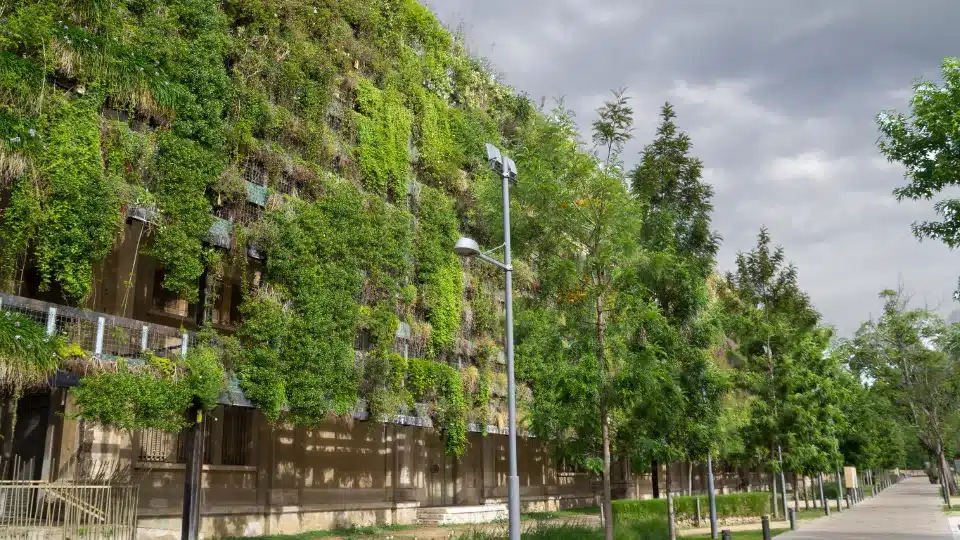
Modern sustainable architecture incorporates passive design principles that minimize energy needs. Strategic building orientation, natural ventilation, daylighting, thermal mass, and high-performance insulation reduce reliance on mechanical heating and cooling systems. Green roofs and walls provide insulation, manage stormwater, reduce urban heat, and create habitat for pollinators and birds.
Retrofitting the Existing Building Stock
While new construction offers opportunities to implement cutting-edge sustainable design, the vast majority of buildings that will exist in 2050 are already standing. This makes retrofitting existing structures essential for achieving climate goals. Energy audits, weatherization programs, upgraded HVAC systems, and renewable energy installations can dramatically improve the environmental performance of older buildings.
Incentive programs and regulations play crucial roles in encouraging building improvements. Some cities offer tax breaks, grants, or expedited permitting for sustainable retrofits. Others implement mandatory energy disclosure requirements or phase in stricter building performance standards over time.
📊 Data-Driven Planning and Smart City Technologies
Technology and data analytics are revolutionizing urban planning, enabling cities to make more informed decisions about climate resilience. Smart sensors, satellite imagery, predictive modeling, and artificial intelligence provide unprecedented insights into urban systems and environmental conditions.
Climate modeling tools help planners anticipate future conditions and design accordingly. These models project temperature changes, precipitation patterns, sea-level rise, and extreme weather probabilities, allowing cities to make long-term infrastructure investments that remain viable under various climate scenarios. Geographic Information Systems (GIS) integrate multiple data layers, revealing vulnerability hotspots and optimal locations for green infrastructure or resilience interventions.
Real-time monitoring systems track air quality, temperature, water levels, traffic flow, and energy consumption. This data enables dynamic management of urban systems, optimizing performance and responding quickly to changing conditions. Some cities are deploying networks of environmental sensors that provide hyperlocal data, helping identify microclimates and target interventions more precisely.
🤝 Community Engagement and Social Equity in Climate Planning
Climate resilience cannot be achieved through top-down planning alone. Meaningful community engagement ensures that urban strategies address the needs of all residents, particularly vulnerable populations who often bear the greatest climate risks. Inclusive planning processes build social cohesion, leverage local knowledge, and increase public support for transformative changes.
Environmental justice must be central to climate-resilient planning. Historically marginalized communities frequently face disproportionate exposure to environmental hazards, including air pollution, flooding, and extreme heat. These same communities often have the least access to climate adaptation resources like green space, quality housing, and reliable infrastructure. Equitable planning addresses these disparities, directing resources toward the neighborhoods most in need.
Participatory planning approaches invite residents to contribute to decision-making processes. Community workshops, participatory budgeting, citizen science projects, and online engagement platforms give people meaningful influence over how their neighborhoods evolve. This involvement produces better outcomes and builds community capacity for ongoing climate action.
Building Climate Literacy and Civic Capacity
Education initiatives that build climate literacy empower residents to make informed decisions and take personal action. Public awareness campaigns, school programs, community workshops, and accessible information resources help people understand climate risks and resilience strategies. When citizens understand the rationale behind planning decisions, they become advocates for sustainable development.
💰 Financing Climate-Resilient Urban Development
Implementing comprehensive climate resilience strategies requires substantial investment. Cities face the challenge of securing adequate funding while balancing competing priorities and fiscal constraints. Innovative financing mechanisms are emerging to support sustainable urban development.
Green bonds have become popular tools for raising capital for environmental projects. These financial instruments allow cities to borrow specifically for climate and sustainability initiatives, often at favorable rates due to investor demand for sustainable investments. Public-private partnerships leverage private sector resources and expertise for infrastructure projects that might otherwise strain municipal budgets.
Federal and international climate funds provide critical resources for urban resilience projects. Many national governments offer grants, loans, or technical assistance for climate adaptation and mitigation efforts. International organizations like the Green Climate Fund and development banks support projects in developing nations where financing challenges are most acute.
🌍 Learning from Global Leaders in Climate-Resilient Planning
Cities around the world are pioneering innovative approaches to climate resilience, offering valuable lessons and inspiration. Copenhagen aims to become the world’s first carbon-neutral capital by 2025 through aggressive emissions reductions, renewable energy deployment, and sustainable transportation. The city’s integrated approach addresses buildings, energy, transportation, and waste management comprehensively.
Melbourne’s urban forest strategy provides a blueprint for greening dense cities. The plan includes detailed inventories of every tree, vulnerability assessments considering climate projections, and ambitious planting targets to double canopy coverage. Each tree is mapped and assigned an email address, allowing residents to report concerns and even send messages to their favorite trees.
Medellín, Colombia, transformed from one of the world’s most dangerous cities to a model of sustainable urban development through innovative planning. Green corridors connect hillside neighborhoods to the city center, cable cars provide accessible public transit, and social urbanism principles ensure infrastructure investments benefit marginalized communities. The city’s dramatic temperature reduction through strategic greening demonstrates the power of nature-based solutions.
🔄 Adaptive Management and Continuous Improvement
Climate resilience is not a destination but an ongoing process. Conditions continue evolving, new technologies emerge, and our understanding of effective strategies deepens. Cities must embrace adaptive management approaches that allow for flexibility, experimentation, and learning.
Regular monitoring and evaluation ensure that implemented strategies achieve intended outcomes. Performance metrics track progress toward resilience goals, identifying successful initiatives and areas needing adjustment. This evidence-based approach allows planners to refine strategies based on actual results rather than assumptions.
Scenario planning helps cities prepare for uncertainty. By developing multiple plausible future scenarios, planners can test strategies under different conditions and design flexible solutions that remain effective across various possibilities. This approach acknowledges the inherent uncertainty in long-term climate projections while still enabling proactive planning.
🚀 The Path Forward: Integrating Resilience into Every Decision
Building climate-resilient cities requires transforming how we plan, design, and manage urban environments. This transformation touches every aspect of city life, from the buildings we construct to the transportation systems we use, from the parks we enjoy to the water flowing through our streets.
The strategies outlined here—green infrastructure, sustainable transportation, water management innovation, urban forests, smart technologies, and equitable engagement—form an interconnected system of resilience. No single intervention suffices; comprehensive approaches that address multiple dimensions simultaneously produce the most robust results.
Urgency cannot be overstated. Every year of delay increases both climate risks and adaptation costs. However, the challenge also presents tremendous opportunity. Climate-resilient cities are more livable, equitable, healthy, and economically vibrant. Investments in sustainability generate returns through reduced energy costs, improved public health, increased property values, and enhanced quality of life.
The cities we build today will shape human experience for generations to come. By prioritizing climate resilience in urban planning, we create communities capable of thriving despite environmental challenges. This requires vision, leadership, collaboration, and sustained commitment from governments, businesses, communities, and individuals. The tools and knowledge exist; what remains is the collective will to build the greener tomorrow our planet desperately needs.
Every city, regardless of size or resources, can take meaningful steps toward climate resilience. Whether implementing a comprehensive green infrastructure network or simply protecting existing trees, each action contributes to a more sustainable urban future. The time for action is now, and the blueprint for success is clear. Together, we can transform our cities into models of environmental stewardship, creating urban environments that work with nature rather than against it, ensuring a livable planet for all.
