
Anúncios
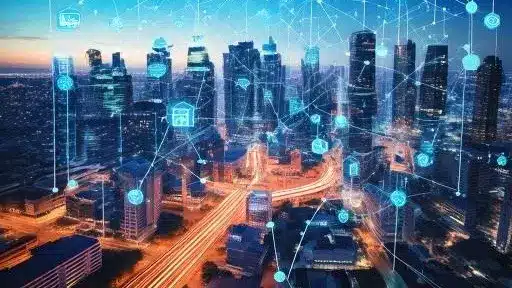
Smart cities are transforming how we generate, distribute, and consume energy, merging digital innovation with sustainable infrastructure to create more resilient and efficient urban environments. ⚡
The Dawn of Intelligent Energy Infrastructure
Urban centers worldwide are experiencing unprecedented growth, with projections indicating that nearly 70% of the global population will live in cities by 2050. This massive urbanization presents both challenges and opportunities for energy management. Traditional power grids, designed decades ago, struggle to meet the dynamic demands of modern cities while maintaining reliability and sustainability. Smart city technologies are stepping in to bridge this gap, offering sophisticated solutions that fundamentally reimagine how energy systems operate.
Anúncios
The convergence of Internet of Things (IoT) devices, artificial intelligence, big data analytics, and renewable energy sources is creating a new paradigm in urban energy management. These technologies enable real-time monitoring, predictive maintenance, automated responses to demand fluctuations, and seamless integration of distributed energy resources. The result is a grid that’s not just smarter but also more democratic, efficient, and environmentally responsible.
Understanding the Smart Grid Revolution 🔌
At the heart of smart city energy transformation lies the smart grid—an electricity network enhanced with digital communication technology that enables two-way dialogue between utilities and consumers. Unlike conventional grids that simply deliver power in one direction, smart grids collect and act upon information about supplier and consumer behavior, creating an automated, distributed energy delivery network.
Anúncios
Smart grids incorporate advanced sensors, meters, digital controls, and analytics tools that optimize grid operations throughout the entire electricity value chain. These systems detect problems before they escalate, reroute power automatically during outages, and balance supply with demand in real-time. This intelligence dramatically reduces energy waste, improves reliability, and facilitates the integration of renewable energy sources that have variable output patterns.
Key Components Driving Grid Intelligence
Smart meters represent the foundation of grid modernization, replacing analog meters with digital devices that measure electricity consumption in real-time and communicate this information back to utilities. These devices provide granular data on energy usage patterns, enabling both consumers and utility companies to make informed decisions about energy consumption and management.
Advanced distribution management systems (ADMS) serve as the brain of smart grids, processing vast amounts of data from sensors and meters to optimize grid performance. These systems use sophisticated algorithms to predict demand, identify potential failures, and automatically adjust distribution to maintain stability and efficiency.
Phasor measurement units (PMUs) monitor the electrical waves on transmission lines, providing high-speed snapshots of grid conditions 30 to 60 times per second. This real-time visibility allows operators to detect instabilities and respond before they cascade into widespread blackouts.
Renewable Integration: Solving the Intermittency Challenge
One of the most significant contributions of smart grid technology is enabling effective integration of renewable energy sources. Solar and wind power, while environmentally beneficial, present operational challenges due to their variable and unpredictable nature. Traditional grids struggle to accommodate these fluctuations, but smart technologies provide solutions through advanced forecasting, energy storage coordination, and demand response programs.
Machine learning algorithms analyze weather patterns, historical data, and real-time conditions to predict renewable energy generation with increasing accuracy. These forecasts allow grid operators to plan for fluctuations and coordinate backup resources efficiently. When combined with battery storage systems, smart grids can store excess renewable energy during peak production periods and discharge it when generation drops or demand spikes.
Distributed Energy Resources: Power to the People
Smart cities are witnessing a shift from centralized power generation to distributed energy resources (DERs), including rooftop solar panels, small wind turbines, battery storage systems, and electric vehicles. Managing thousands of small-scale energy producers requires sophisticated coordination that only smart grid technologies can provide.
Virtual power plants (VPPs) aggregate the capacity of multiple DERs, coordinating their operation to function as a single, flexible power plant. Through cloud-based platforms and AI-driven optimization, VPPs balance local energy generation and consumption, reduce strain on transmission infrastructure, and provide grid services traditionally supplied by large conventional power plants.
Demand Response: Transforming Consumers into Grid Participants 🏙️
Smart city technologies are revolutionizing the relationship between energy consumers and the grid through demand response programs. Instead of passively consuming electricity, buildings and businesses can actively participate in grid management by adjusting their energy usage in response to real-time pricing signals or grid conditions.
Automated demand response systems use IoT devices and smart controls to adjust heating, cooling, lighting, and other electrical loads without compromising comfort or productivity. During peak demand periods when electricity is expensive and the grid is strained, these systems temporarily reduce consumption, helping prevent blackouts and reducing the need for expensive peaker plants that only operate during high-demand periods.
Time-of-use pricing, enabled by smart metering infrastructure, encourages consumers to shift energy-intensive activities to off-peak hours when electricity is cheaper and cleaner. This load shifting smooths demand curves, improves grid efficiency, and reduces overall energy costs for both utilities and consumers.
Electric Vehicles: Mobile Energy Storage Solutions
The rapid adoption of electric vehicles (EVs) presents both challenges and opportunities for urban energy grids. While EV charging increases electricity demand, smart charging technologies and vehicle-to-grid (V2G) capabilities transform EVs into distributed energy storage assets that can support grid stability.
Smart charging systems optimize when and how EVs charge based on grid conditions, renewable energy availability, and electricity prices. During periods of high renewable generation and low demand, EVs charge at maximum rates, effectively storing clean energy. Conversely, charging slows or pauses during peak demand periods, reducing grid stress.
Vehicle-to-grid technology takes this concept further, allowing EVs to discharge stored energy back to the grid when needed. This bidirectional energy flow provides valuable grid services, including frequency regulation, voltage support, and emergency backup power. As EV adoption grows, the collective battery capacity of vehicles in a smart city could provide significant grid stabilization and storage capacity.
Artificial Intelligence: The Brain Behind Smart Grids 🧠
Artificial intelligence and machine learning are transforming raw data from smart grid sensors into actionable insights and automated responses. AI algorithms process enormous datasets to identify patterns, predict failures, optimize operations, and continuously improve grid performance.
Predictive maintenance powered by AI analyzes data from grid equipment to identify degradation patterns and predict failures before they occur. This proactive approach reduces outages, extends equipment lifespan, and optimizes maintenance schedules, saving utilities billions of dollars while improving reliability for consumers.
AI-driven load forecasting has become increasingly sophisticated, incorporating weather data, economic indicators, social events, and historical patterns to predict electricity demand with remarkable accuracy. These forecasts enable utilities to optimize generation schedules, reduce reliance on expensive backup capacity, and better coordinate renewable energy resources.
Cybersecurity in Connected Energy Systems
As energy grids become increasingly digitized and interconnected, cybersecurity emerges as a critical concern. Smart grids create numerous entry points for potential cyberattacks, and disruption of energy infrastructure could have devastating consequences for urban populations and economies.
Advanced security protocols, including blockchain technology, encryption, multi-factor authentication, and continuous monitoring, protect smart grid infrastructure from cyber threats. AI-powered security systems detect anomalous behavior that might indicate an attack, enabling rapid response before damage occurs. Regular security audits and updates ensure that defenses evolve alongside emerging threats.
Microgrids: Resilience Through Decentralization
Microgrids represent a key component of smart city energy strategies, providing localized energy generation, storage, and distribution that can operate independently from the main grid. These self-sufficient energy systems enhance resilience, reduce transmission losses, and support community energy independence.
During grid outages caused by storms, equipment failures, or other disruptions, microgrids can disconnect from the main grid and continue supplying power to critical facilities like hospitals, emergency services, and communication infrastructure. This islanding capability dramatically improves urban resilience, particularly as climate change increases the frequency and severity of extreme weather events.
University campuses, military bases, industrial facilities, and entire neighborhoods are implementing microgrid solutions that combine local renewable generation, battery storage, and smart controls. These systems reduce energy costs, improve reliability, and demonstrate the viability of decentralized energy models at scale.
Data Analytics: Unlocking Grid Optimization Opportunities 📊
The vast amounts of data generated by smart grid sensors and meters provide unprecedented visibility into energy system operations. Advanced analytics platforms transform this raw data into actionable intelligence that drives continuous optimization and innovation.
Energy utilities use analytics to identify system inefficiencies, optimize asset utilization, and improve customer service. Detailed consumption data reveals patterns that inform infrastructure investment decisions, helping utilities deploy resources where they’ll have the greatest impact. Predictive analytics identify grid congestion points before they become problems, allowing proactive solutions that maintain reliability and quality of service.
Consumers benefit from data analytics through personalized energy insights that help them understand and reduce their consumption. Smart home energy management systems provide recommendations for efficiency improvements, track progress toward sustainability goals, and automate adjustments that reduce costs without sacrificing comfort.
Building Energy Management: The Smart City Foundation
Buildings account for approximately 40% of global energy consumption, making them critical targets for smart city efficiency initiatives. Smart building technologies integrate lighting, heating, ventilation, air conditioning, and other systems into unified platforms that optimize performance based on occupancy, weather, energy prices, and grid conditions.
IoT sensors monitor occupancy, temperature, humidity, air quality, and equipment performance throughout buildings, providing data that informs automated control systems. Machine learning algorithms identify optimization opportunities, gradually improving efficiency as they learn building-specific patterns and preferences.
Building-to-grid integration enables structures to participate in demand response programs, coordinate with renewable energy sources, and even serve as virtual power plants. This integration transforms buildings from passive energy consumers into active grid participants that contribute to overall system efficiency and stability.
Policy and Regulatory Frameworks: Enabling Innovation 📋
The transformation of energy grids through smart city technologies requires supportive policy and regulatory frameworks that encourage innovation while protecting consumer interests and ensuring system reliability. Traditional utility regulations, designed for centralized generation and one-way power flows, often hinder smart grid adoption and renewable integration.
Progressive jurisdictions are updating regulations to accommodate distributed energy resources, enable fair compensation for energy exported to the grid, and create incentives for efficiency investments. Net metering policies, renewable portfolio standards, and performance-based utility compensation models align regulatory frameworks with smart grid objectives.
Data privacy regulations ensure that the detailed consumption information collected by smart meters is protected and used responsibly. Clear guidelines about data ownership, access, and usage build public trust in smart grid technologies and encourage participation in demand response and efficiency programs.
Global Success Stories: Cities Leading the Energy Revolution 🌍
Copenhagen, Denmark has emerged as a global smart city energy leader, leveraging district heating systems, wind power, and comprehensive data analytics to work toward carbon neutrality by 2025. The city’s intelligent street lighting adjusts brightness based on pedestrian and vehicle traffic, while smart heating systems balance supply across neighborhoods in real-time.
Singapore’s Smart Nation initiative includes sophisticated grid management that optimizes solar generation across thousands of rooftops, coordinates electric vehicle charging, and uses predictive analytics to enhance system reliability. The city-state’s compact geography and technology-forward culture make it an ideal laboratory for advanced energy solutions.
Barcelona, Spain has implemented a comprehensive smart city energy strategy that includes sensor-equipped street lighting, smart water management integrated with energy systems, and neighborhood-scale renewable energy projects. The city’s approach emphasizes citizen participation and social equity alongside technological innovation.
The Road Ahead: Emerging Technologies and Future Possibilities
The evolution of smart grid technologies continues to accelerate, with emerging innovations promising even greater efficiency, resilience, and sustainability. Quantum computing could revolutionize grid optimization by solving complex problems that are currently computationally prohibitive. Advanced energy storage technologies, including solid-state batteries and hydrogen systems, will enable longer-duration storage that complements renewable generation.
Digital twins—virtual replicas of physical grid infrastructure—allow utilities to simulate scenarios, test strategies, and optimize operations without risk to actual systems. These sophisticated models incorporate real-time data, enabling operators to predict the consequences of decisions before implementation.
The integration of 5G networks will dramatically enhance smart grid communications, enabling faster responses, supporting more connected devices, and facilitating edge computing that processes data locally for improved speed and security. This enhanced connectivity will support increasingly sophisticated coordination between grid components and participants.
Empowering Communities Through Energy Intelligence
The transformation of energy grids through smart city technologies extends beyond technical improvements to fundamentally reshape how communities interact with energy systems. Transparent data about energy sources, costs, and environmental impacts empowers citizens to make informed choices that align with their values and priorities.
Community energy projects, facilitated by smart grid technologies, allow neighborhoods to collectively invest in renewable generation, share the benefits of local production, and strengthen social bonds around sustainability goals. These initiatives demonstrate that energy transformation is not just a technical challenge but an opportunity to build more connected, resilient, and equitable communities.
As smart city energy technologies continue to mature and proliferate, they promise a future where clean, reliable, affordable electricity is accessible to all urban residents. The revolution in energy grids represents not just an infrastructure upgrade but a fundamental reimagining of the relationship between cities, technology, and the environment—a transformation that will power sustainable urban life for generations to come. ✨
