
Anúncios
Biophilic design represents a revolutionary approach to architecture and interior spaces that reconnects humans with nature, transforming how we live, work, and heal in our built environments.
🌿 Understanding the Fundamental Principles of Biophilic Design
The term “biophilia” literally translates to “love of life,” coined by psychologist Erich Fromm and later popularized by biologist E.O. Wilson. This innate human tendency to seek connections with nature and other forms of life forms the foundation of biophilic design philosophy. Modern society has increasingly isolated people from natural environments, creating what author Richard Louv calls “nature deficit disorder,” which manifests in various physical and psychological ailments.
Anúncios
Biophilic design goes beyond simply adding potted plants to office spaces or hanging nature photographs on walls. It encompasses a comprehensive integration of natural elements, patterns, processes, and experiences into the built environment. This design philosophy acknowledges that humans evolved in natural settings and remain biologically adapted to respond positively to nature’s presence, even in subtle forms.
Research from environmental psychology demonstrates that exposure to natural elements activates the parasympathetic nervous system, reducing stress hormones like cortisol while increasing production of mood-enhancing neurotransmitters. These biological responses occur automatically, often below conscious awareness, making biophilic design particularly powerful for enhancing well-being in spaces where people spend significant time.
Anúncios
The Three Core Categories of Biophilic Implementation
Biophilic design organizes into three distinct yet interconnected categories, each offering unique pathways to reconnect occupants with natural experiences. Understanding these categories helps designers and homeowners make informed decisions about which elements will deliver maximum health benefits.
Nature in the Space: Direct Physical Presence
This category involves the most recognizable biophilic elements—actual natural components within buildings. Living plants serve as the most obvious example, but this category extends to water features, natural materials like wood and stone, and provisions for natural light and fresh air circulation. These direct nature experiences create immediate sensory engagement through sight, sound, touch, and smell.
Healthcare facilities pioneering biophilic design have documented remarkable outcomes. Patients in rooms with views of trees recover faster from surgery, require less pain medication, and report higher satisfaction scores compared to those facing brick walls. The presence of aquariums in dental offices reduces patient anxiety measurably, while office workers near windows take fewer sick days annually.
Natural Analogues: Indirect Evocations
When incorporating actual nature proves impractical, natural analogues provide effective alternatives. These include organic shapes, biomorphic patterns, natural colors, and materials that evoke natural elements without being nature itself. Fractals—the repeating patterns found throughout nature—can be incorporated through artwork, textiles, and architectural details.
This category recognizes that humans respond positively to representations and abstractions of nature. A carpet pattern mimicking flowing water, wooden textures on furniture surfaces, or lighting that changes color temperature throughout the day all qualify as natural analogues that trigger beneficial physiological responses.
Nature of the Space: Spatial Configurations
The third category addresses how spaces are configured to reflect natural environments. This includes creating prospect and refuge conditions—the evolutionary advantage of seeing without being seen—along with organized complexity, transitional spaces, and connections between indoor and outdoor areas. These spatial characteristics satisfy deep-seated human preferences developed over millennia.
Designing spaces with varying ceiling heights, creating niches and alcoves, establishing clear sightlines while maintaining private areas, and incorporating natural ventilation patterns all fall within this category. These elements may not appear obviously “natural” but resonate with our innate spatial preferences shaped by evolutionary history.
🏥 Quantifiable Health Benefits Backed by Research
The health advantages of biophilic design extend far beyond aesthetic appeal, with decades of peer-reviewed research documenting measurable improvements across physical, psychological, and cognitive domains. These benefits have transformed biophilic principles from architectural trends into evidence-based design strategies.
Cardiovascular health improves significantly with nature exposure. Studies measuring heart rate variability—a key indicator of stress resilience—show marked improvement in biophilically-designed spaces. Blood pressure readings decrease by an average of 5-7 points systolic when people spend time in environments with robust natural elements compared to conventional spaces lacking these features.
Mental health outcomes demonstrate equally compelling results. Depression and anxiety symptoms reduce by 30-40% among individuals working in biophilic environments versus traditional office settings. Attention Restoration Theory explains this phenomenon: natural elements allow the brain’s directed attention mechanisms to rest while engaging effortless attention, reducing mental fatigue and improving overall psychological well-being.
Immune function strengthens through exposure to beneficial microorganisms present in natural settings and through stress reduction mechanisms. Research on “forest bathing” or shinrin-yoku shows increased natural killer cell activity lasting up to 30 days after nature exposure. While indoor biophilic design cannot replicate forest immersion entirely, strategic integration of living plants and natural ventilation provides measurable immune benefits.
Cognitive Performance and Creative Enhancement 🧠
Beyond health maintenance, biophilic design actively enhances cognitive capabilities. Students in classrooms with ample natural light, views of greenery, and living plants demonstrate 20-25% faster learning progression in standardized tests compared to peers in conventional classrooms. These improvements persist across diverse subjects, from mathematics to language arts.
Creative problem-solving abilities flourish in biophilically-designed workspaces. Employees report 15% higher creativity scores on standardized assessments when working in offices incorporating natural elements versus those in sterile, conventional spaces. This creativity boost translates to tangible business outcomes, with companies reporting increased innovation rates and patent applications after implementing biophilic workplace redesigns.
Memory consolidation and retention improve measurably in natural settings. Students who take study breaks in green spaces or rooms with significant plant presence retain information 20% more effectively than those taking breaks in conventional spaces. This effect likely results from the restorative properties of nature exposure, which replenishes cognitive resources depleted by intensive mental work.
Practical Implementation Strategies for Different Settings
Translating biophilic principles into actual spaces requires context-specific strategies that account for budget constraints, spatial limitations, and functional requirements. Successful implementation begins with assessment of existing conditions and identification of highest-impact interventions.
Residential Spaces: Creating Healing Homes
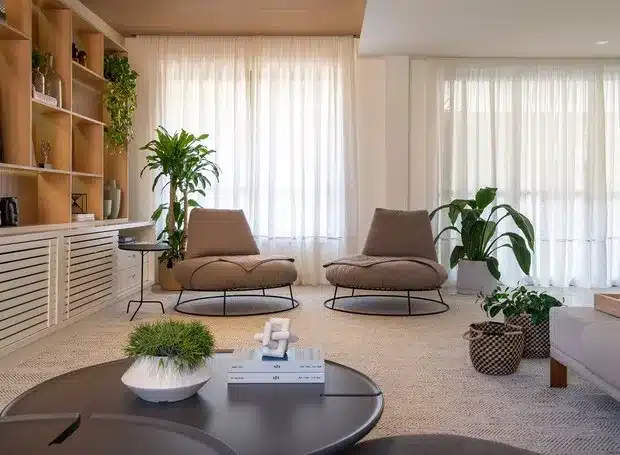
Homes offer the greatest flexibility for biophilic integration since occupants control design decisions. Start by maximizing natural light through strategic window placement, reflective surfaces, and removing heavy window treatments. Even apartments can enhance daylight through mirrors positioned to bounce light deeper into living spaces.
Introduce living plants systematically, selecting species appropriate for available light conditions. Snake plants and pothos thrive in low-light areas, while herbs and succulents require brighter locations. Aim for one substantial plant per 100 square feet of living space to achieve measurable air quality and psychological benefits.
Material selection profoundly impacts biophilic effectiveness. Prioritize natural materials—hardwood floors, stone countertops, bamboo textiles—over synthetic alternatives whenever budget permits. When natural materials prove cost-prohibitive, high-quality representations providing visual and tactile authenticity serve as effective substitutes.
Office Environments: Productivity Through Nature
Corporate settings present unique challenges due to competing demands for efficiency, standardization, and cost control. However, the productivity gains from biophilic design often justify initial investment within 2-3 years through reduced absenteeism, improved retention, and enhanced output.
Green walls or vertical gardens make dramatic statements while requiring relatively modest floor space. These installations filter air, regulate humidity, reduce ambient noise, and provide visual focal points that reduce eye strain from screen work. Maintenance requirements have decreased substantially with modern irrigation systems and hardy plant selections.
Workstation design should prioritize window access, with rotation policies ensuring equitable distribution when windowed spaces are limited. For interior spaces lacking natural views, high-quality nature imagery, particularly depicting water and vegetation, provides documented benefits. Digital displays showing real-time nature scenes outperform static images by maintaining novelty and engagement.
Healthcare Facilities: Healing Environments
Medical settings benefit enormously from biophilic principles, with research showing 8-10% faster patient recovery rates in biophilically-designed hospitals. Healing gardens accessible to patients, family members, and staff provide respite from clinical environments while supporting physical rehabilitation through gentle walking paths.
Patient rooms incorporating views of nature, natural light cycles, and living plants reduce pain medication requirements and improve sleep quality. These factors compound to create measurably superior outcomes while simultaneously reducing healthcare costs through shortened stays and fewer complications.
Staff areas deserve equal attention, as caregiver well-being directly impacts patient care quality. Break rooms with natural light, comfortable seating overlooking gardens, and indoor plants help mitigate the intense stress healthcare workers face, reducing burnout rates and improving job satisfaction.
🌍 Environmental Sustainability and Biophilic Design Synergy
Biophilic design naturally aligns with environmental sustainability, though the two concepts remain distinct. Sustainable design focuses primarily on reducing environmental impact, while biophilic design prioritizes human-nature connections. The most successful projects integrate both philosophies to create spaces that benefit occupants and ecosystems simultaneously.
Living green roofs exemplify this synergy perfectly. They reduce building energy consumption through insulation, manage stormwater runoff, extend roof lifespan, reduce urban heat island effects, and provide habitat for pollinators—all while offering building occupants psychological benefits through visual connection with nature.
Natural ventilation strategies reduce energy consumption while providing the dynamic air movement and temperature variations humans find comfortable. Unlike mechanical HVAC systems producing constant conditions, natural ventilation creates subtle variability that keeps occupants engaged with their environment and improves perceived air quality.
Material selection represents another convergence point. Locally-sourced, rapidly-renewable materials like bamboo reduce environmental impact while providing the authentic natural textures and patterns that trigger positive biophilic responses. Reclaimed wood offers unique character impossible to replicate with new materials while embodying principles of resource conservation.
Overcoming Common Implementation Challenges
Despite compelling evidence supporting biophilic design, implementation faces predictable obstacles. Budget constraints top most lists, particularly for renovation projects where incorporating natural elements requires structural modifications. However, strategic prioritization delivers significant benefits even with modest investments.
Start with highest-impact, lowest-cost interventions. Removing window obstructions costs nothing but dramatically increases natural light. Rearranging furniture to maximize nature views requires only time. Introducing plants begins at minimal cost with propagated cuttings. These foundational steps create immediate benefits while building momentum for larger investments.
Maintenance concerns deter many from living plants, but species selection eliminates most difficulties. Hardy varieties like snake plants, ZZ plants, and pothos tolerate neglect remarkably well, requiring water only every 2-3 weeks. Self-watering planters further reduce maintenance demands while preventing overwatering—the primary cause of houseplant death.
Space limitations in urban settings require creative solutions. Vertical gardens maximize plant presence without consuming floor space. Window boxes extend growing area beyond interior constraints. Hanging planters utilize vertical space while creating visual interest at varying heights, mimicking natural forest canopy layers.
🔮 Future Directions in Biophilic Innovation
Emerging technologies promise to expand biophilic design possibilities dramatically. Virtual and augmented reality applications deliver nature experiences regardless of physical location, with research confirming that high-quality virtual nature exposure produces measurable stress reduction and attention restoration—though not yet matching real nature’s effectiveness.
Smart building systems increasingly incorporate biophilic principles through automated controls. Circadian lighting systems adjust color temperature and intensity throughout the day, mimicking natural sunlight patterns to support healthy sleep-wake cycles. Automated window shades optimize natural light while preventing glare and excessive heat gain.
Biotechnology advances enable novel applications like bioluminescent plants providing ambient lighting without electricity or bacteria-based air purification systems surpassing conventional filtration. While many such innovations remain experimental, they illustrate the expanding toolkit available for integrating living systems into built environments.
Urban planning increasingly embraces biophilic principles at neighborhood and city scales. Singapore leads globally with its “City in a Garden” vision, mandating green space ratios for new developments and creating extensive skyway gardens connecting buildings. These macro-scale interventions demonstrate biophilic design’s potential to reshape entire urban landscapes.
Measuring Success: Biophilic Design Assessment Tools
Quantifying biophilic design effectiveness helps justify investments and guide optimization efforts. Several frameworks now provide structured assessment methodologies, allowing comparison between projects and tracking improvements over time.
The Terrapin Bright Green framework evaluates presence and quality of 14 biophilic patterns across three categories. This comprehensive approach scores both quantity of biophilic elements and their implementation quality, recognizing that superficial applications deliver minimal benefits compared to thoughtfully-integrated strategies.
Post-occupancy evaluations measure actual outcomes through occupant surveys, physiological monitoring, and performance metrics. These assessments reveal which interventions deliver strongest benefits in specific contexts, building evidence bases for future projects. Healthcare facilities tracking patient outcomes, schools measuring academic performance, and offices monitoring productivity all contribute to expanding our understanding of effective biophilic design.
🌱 Taking Action: Your Biophilic Journey Begins Now
Understanding biophilic principles intellectually differs vastly from experiencing their benefits personally. Beginning your own biophilic design journey requires neither expertise nor substantial investment—just willingness to reconnect with nature in your immediate environment.
Conduct a personal space audit, evaluating your home and workspace against biophilic criteria. How much natural light reaches your primary living areas? What views do your windows offer? How many living plants share your space? Which materials dominate your surroundings—natural or synthetic? This assessment reveals opportunities for improvement.
Implement one change this week. Open curtains fully to maximize daylight. Acquire a single robust houseplant. Replace synthetic desk accessories with wooden alternatives. Hang nature photography depicting favorite landscapes. These small steps initiate transformation while building confidence for larger interventions.
Observe your responses carefully. Notice whether morning natural light improves wakefulness. Track whether plants in your workspace affect concentration or mood. Pay attention to how natural materials feel compared to plastic and metal. This mindful attention helps identify which biophilic elements resonate most strongly with your individual preferences and needs.
Biophilic design represents far more than aesthetic trend or architectural novelty. It embodies a fundamental recognition that human health, well-being, and performance remain inextricably linked with natural world connections. As research continues validating these ancient intuitions through modern science, the imperative to redesign our built environments grows increasingly clear. Nature’s blueprint for human flourishing has always existed—biophilic design simply helps us remember, honor, and implement these essential patterns in spaces where we spend our lives.
