
Anúncios
Regenerative architecture is reshaping how we design, build, and interact with our environment, creating spaces that actively restore ecosystems while supporting human communities and biodiversity.
🌱 The Evolution Beyond Sustainability
For decades, the architecture and construction industries have pursued sustainability as the ultimate goal. However, a growing movement recognizes that merely sustaining our current environmental conditions isn’t enough. Our planet needs healing, not just maintenance. This realization has given birth to regenerative architecture—a philosophy that views buildings not as static objects but as living systems capable of contributing positively to their surroundings.
Anúncios
Regenerative design goes beyond reducing negative impacts. It actively seeks to create positive environmental, social, and economic value. Rather than simply minimizing carbon emissions, regenerative buildings can become carbon-negative. Instead of consuming resources, they can generate energy, purify water, and provide habitat for diverse species.
This paradigm shift represents a fundamental rethinking of architecture’s role in society. Buildings account for nearly 40% of global carbon emissions and consume vast amounts of natural resources. By transforming these structures from environmental liabilities into ecological assets, we can address multiple crises simultaneously—climate change, biodiversity loss, and resource depletion.
Anúncios
🏗️ Core Principles of Regenerative Design
Regenerative architecture operates on several interconnected principles that distinguish it from conventional green building approaches. Understanding these foundations helps us appreciate the depth and potential of this movement.
Working With Natural Systems
Rather than fighting against nature, regenerative architecture works in harmony with existing ecosystems. This means carefully studying local climate patterns, water cycles, soil conditions, and native species before breaking ground. Architects become students of their sites, learning what the land needs and how buildings can fulfill those needs while serving human purposes.
Projects might incorporate features like bioswales that manage stormwater while creating wildlife corridors, or green roofs that provide insulation while supporting pollinator populations. Every design decision considers how it impacts the larger ecological web.
Biomimicry and Natural Intelligence
Nature has spent billions of years solving design challenges through evolution. Regenerative architecture draws inspiration from these time-tested solutions. Buildings might mimic termite mounds for passive cooling, replicate leaf structures for efficient water collection, or copy coral reef patterns for structural strength.
This approach produces buildings that are not only more sustainable but often more beautiful and functional. Nature’s designs are inherently efficient, having been refined through countless iterations to use minimal resources while maximizing performance.
Circular Material Flows
Traditional construction follows a linear model: extract resources, build structures, generate waste. Regenerative architecture embraces circular economy principles where materials continuously cycle through use and reuse. Buildings are designed for disassembly, with materials chosen for their ability to be reclaimed, recycled, or safely returned to the biosphere.
This might include using rapidly renewable materials like bamboo, implementing modular construction techniques that allow components to be reconfigured or relocated, or selecting materials that actually improve with age rather than degrading.
🦋 Biodiversity: The Living Dimension
Perhaps the most revolutionary aspect of regenerative architecture is its explicit focus on supporting biodiversity. In an era of mass extinction, every building becomes an opportunity to provide habitat and resources for non-human species.
Creating Urban Ecosystems
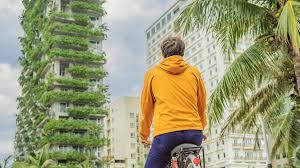
Cities have traditionally been ecological dead zones, displacing native habitats with concrete and steel. Regenerative architecture challenges this assumption by integrating natural elements at every scale. Vertical forests on building facades provide nesting sites for birds and perches for insects. Ground-level gardens with native plants support local pollinator populations. Even small design choices—like leaving gaps in fences for hedgehogs or installing bee hotels in walls—can make significant differences.
The Bosco Verticale in Milan demonstrates this principle dramatically, with two residential towers hosting over 20,000 plants from 900 species. These living facades don’t just look spectacular—they produce oxygen, absorb CO2, moderate temperature, and provide habitat for numerous bird and insect species that had been absent from the city center.
Wildlife Corridors and Connectivity
Isolated pockets of habitat cannot sustain healthy populations. Regenerative projects consider how they connect to larger ecological networks. A building might include green bridges linking separated parks, or position plantings to create stepping-stone habitats that allow species to move across urban landscapes.
This connectivity thinking operates at multiple scales—from individual buildings to neighborhoods to regional planning. The goal is creating resilient ecological networks where species can thrive, migrate, and adapt to changing conditions.
💧 Water as a Design Partner
Water management exemplifies how regenerative architecture transforms problems into opportunities. Rather than quickly channeling rainwater into storm drains (often causing flooding and pollution), regenerative buildings capture, clean, and utilize precipitation.
Rain gardens and constructed wetlands filter stormwater while creating beautiful landscapes. Greywater systems recycle water from sinks and showers for irrigation. Some projects even extract drinking water from air through atmospheric water generators powered by renewable energy. These approaches reduce strain on municipal infrastructure while recharging groundwater and supporting aquatic ecosystems.
The Bullitt Center in Seattle achieves net-positive water status by capturing all its water needs from rainfall. Its green roof and rain garden system not only provides 100% of building water requirements but also filters runoff, preventing pollutants from reaching Puget Sound.
⚡ Energy Generation and Climate Resilience
Regenerative buildings produce more energy than they consume, transforming structures into power plants. Solar panels, wind turbines, and geothermal systems are integrated from the earliest design stages, not added as afterthoughts. Building orientation, window placement, and thermal mass are optimized to reduce energy needs before renewable generation is even considered.
But energy independence goes beyond economics and emissions. As climate change brings more extreme weather events, regenerative buildings enhance community resilience. They can maintain operation during grid failures, provide emergency shelter during disasters, and help stabilize local power networks through distributed generation and storage.
Passive Design Strategies
The most sustainable energy is energy never needed in the first place. Regenerative architecture prioritizes passive strategies that work with climate and physics rather than against them. Proper orientation captures winter sun while avoiding summer overheating. Thermal mass stores heat or coolness for later release. Natural ventilation moves air without mechanical systems. Strategic landscaping provides shade and wind protection.
These time-tested approaches, enhanced with modern materials and digital modeling tools, can dramatically reduce energy demands. Many regenerative buildings require 80-90% less heating and cooling energy than conventional structures.
🌾 Material Innovation and Carbon Storage
The materials we build with carry enormous environmental footprints. Cement production alone accounts for 8% of global CO2 emissions. Regenerative architecture seeks alternatives that store carbon rather than releasing it.
Timber from sustainably managed forests sequesters carbon for the life of the building. Mass timber construction techniques now allow wooden structures to reach heights previously only possible with steel and concrete. Bamboo grows rapidly while absorbing significant CO2. Hemp-based building materials, mycelium composites, and other bio-based alternatives are emerging as viable options.
Some projects go further, incorporating living materials that continue growing after installation. Bioreceptive facades encourage moss and lichen growth, creating self-maintaining green walls. These living skins improve air quality, reduce heat island effects, and support biodiversity while requiring minimal maintenance.
👥 Social Regeneration and Community Health
True regeneration encompasses social and cultural dimensions alongside environmental ones. Regenerative buildings create spaces that enhance human wellbeing, foster community connections, and honor local cultures and histories.
Biophilic Design for Human Flourishing
Humans have an innate connection to nature—what biologist E.O. Wilson termed “biophilia.” Regenerative architecture leverages this relationship, incorporating natural elements that reduce stress, improve cognitive function, and enhance overall health. Access to natural light, views of vegetation, natural materials, and opportunities to interact with living systems all contribute to occupant wellbeing.
Studies consistently show that people in biophilic environments experience lower blood pressure, better concentration, faster healing, and improved mood. Schools with natural light and green views see better academic performance. Hospitals with nature access have shorter patient recovery times.
Creating Gathering Spaces
Regenerative projects often include community spaces that bring people together—shared gardens, outdoor classrooms, communal kitchens, and flexible gathering areas. These spaces strengthen social bonds, which research shows are crucial for both individual health and community resilience.
By creating environments where people naturally interact with neighbors and nature simultaneously, regenerative architecture addresses both social isolation and nature deficit disorder—two significant challenges in modern urban life.
📊 Measuring Regenerative Impact
How do we know if buildings are truly regenerative? New assessment frameworks are emerging that go beyond traditional green building certifications. These tools measure positive contributions rather than just reduced harm.
The Living Building Challenge, one of the most rigorous standards, requires projects to generate all their energy, capture all their water, and use only materials without harmful chemicals. It also mandates beauty and inspiration, recognizing that truly sustainable solutions must engage human hearts as well as minds.
Other emerging metrics track biodiversity improvement, soil health enhancement, social equity contributions, and local economic benefits. These holistic assessments recognize that environmental, social, and economic systems are inseparable.
🚀 From Vision to Reality: Implementation Challenges
Despite its promise, regenerative architecture faces significant obstacles. Initial costs often exceed conventional construction, though lifecycle analysis typically shows long-term savings. Building codes designed for traditional construction may not accommodate innovative approaches. Professional training hasn’t kept pace with regenerative principles. Financing structures favor short-term returns over long-term value creation.
Overcoming these barriers requires systemic change. Forward-thinking policies can incentivize regenerative approaches through tax credits, expedited permitting, or density bonuses. Educational institutions must update curricula to prepare the next generation of designers. Financial institutions need new models that account for regenerative buildings’ full value proposition—including health benefits, ecosystem services, and climate resilience.
🌍 Global Examples Leading the Way
Around the world, pioneering projects demonstrate regenerative architecture’s potential. The Edge in Amsterdam produces more energy than it uses while providing exceptional workspace. Singapore’s Parkroyal Collection Pickering integrates extensive greenery that replaces the development’s ecological footprint. Australia’s Pixel Building achieves carbon-neutral operation while harvesting all its water.
These aren’t experimental curiosities but functional buildings housing real people and activities. They prove that regenerative design is practical, achievable, and scalable. As more examples emerge, they provide templates for others to adapt and improve upon.
🔮 The Future We’re Building
Regenerative architecture represents more than a technical evolution—it’s a philosophical shift in humanity’s relationship with the built environment. Instead of seeing buildings as separate from nature, we recognize them as participants in living systems. Rather than accepting environmental degradation as construction’s inevitable consequence, we create structures that heal and restore.
This transformation comes at a critical moment. With urbanization accelerating and climate impacts intensifying, the buildings we construct in coming decades will profoundly shape our collective future. Every project is an opportunity to choose regeneration over depletion, abundance over scarcity, and vitality over decline.
The technical knowledge exists. The design principles are established. What remains is the collective will to implement regenerative approaches at scale. This requires collaboration across disciplines—architects, engineers, ecologists, policymakers, and communities working together toward shared goals.
Individual choices matter too. Property owners can incorporate regenerative principles in renovations. Tenants can support buildings that prioritize environmental performance. Citizens can advocate for policies that encourage regenerative development. Investors can direct capital toward projects that generate multiple forms of value.
🌟 Building Hope, One Project at a Time
In a time of environmental anxiety, regenerative architecture offers tangible hope. It demonstrates that human creativity and ingenuity can solve the problems we’ve created. More than that, it shows we can create a future where both people and planet thrive together—not in spite of development but because of how we choose to develop.
Each regenerative building is a seed of this possible future. As these seeds multiply and connect, they form an emerging landscape of healing—cities that breathe, buildings that shelter diverse life, and communities that flourish within rather than against ecological limits. This is the sustainable future regenerative architecture is building, one thoughtful project at a time, growing from isolated examples into a movement that could reshape our world.
The question is no longer whether regenerative architecture is possible. Countless projects prove it is. The question now is how quickly we can scale these approaches to meet the urgent challenges we face. The answer depends on all of us—the choices we make, the standards we demand, and the vision we hold for the built environment’s role in creating a thriving future for all life on Earth.
