
Anúncios
Passive House design represents a groundbreaking approach to building construction that dramatically reduces energy consumption while creating exceptionally comfortable living spaces for occupants worldwide.
As climate change accelerates and energy costs continue to rise, architects, builders, and homeowners are searching for sustainable solutions that don’t compromise on comfort or aesthetics. The Passive House standard, originally developed in Germany as “Passivhaus,” has emerged as the gold standard for energy-efficient building design, offering a proven framework that can reduce heating and cooling energy requirements by up to 90% compared to conventional buildings.
Anúncios
This revolutionary design philosophy isn’t just about adding insulation or installing efficient windows—it’s a comprehensive, science-based approach that considers every aspect of a building’s performance. From the foundation to the roof, every component works together to create a structure that maintains comfortable temperatures year-round with minimal active heating or cooling systems.
🏠 What Makes Passive House Design Revolutionary?
The Passive House standard fundamentally reimagines how we think about building performance. Unlike traditional construction methods that rely heavily on mechanical systems to maintain comfort, Passive House design focuses on creating an envelope so efficient that the building essentially heats and cools itself through passive means.
Anúncios
At its core, this approach leverages five key principles that work synergistically to achieve extraordinary energy efficiency. These principles have been refined over three decades of research and real-world application, resulting in thousands of successful projects across diverse climates—from arctic regions to tropical environments.
The beauty of Passive House design lies in its adaptability. Whether you’re constructing a single-family home, a multi-unit apartment building, a school, or an office complex, these principles can be applied to achieve dramatic energy savings while enhancing occupant comfort and indoor air quality.
The Five Pillars of Passive House Performance
1. Superior Insulation Throughout the Building Envelope 🧱
Exceptional insulation forms the foundation of Passive House design. This goes far beyond simply adding extra layers of fiberglass batts. Passive House projects utilize continuous insulation that wraps the entire building envelope without thermal bridges—those weak points where heat can escape or enter.
The insulation levels required vary based on climate zone, but they’re typically two to three times thicker than conventional construction standards. In cold climates, wall assemblies might feature 12 to 16 inches of insulation, while roofs can have 20 inches or more. This creates a thermal barrier so effective that internal heat gains from occupants, appliances, and sunlight become significant contributors to the building’s heating needs.
Advanced insulation materials like mineral wool, cellulose, and rigid foam boards are strategically deployed to eliminate thermal bridging at structural connections, corners, and transitions. Every junction is carefully detailed during the design phase to ensure continuous thermal protection.
2. High-Performance Windows and Doors
Windows represent one of the weakest points in any building envelope, which is why Passive House standards demand exceptional window performance. Triple-pane windows with specialized low-emissivity coatings and insulated frames are standard requirements, achieving U-values as low as 0.14 BTU/hr-ft²-°F—dramatically better than typical double-pane windows.
These high-performance windows aren’t just about insulation value. Their design also considers solar heat gain, with strategic placement and sizing to maximize beneficial solar gains in winter while minimizing overheating in summer. The frames themselves are thermally broken and insulated, preventing the frame from becoming a thermal bridge.
Proper installation is equally critical. Windows are set within the insulation layer rather than at the structural frame, and careful air sealing around the entire perimeter ensures no gaps compromise performance. This attention to detail transforms windows from liability to asset in the building’s thermal performance.
3. Airtight Construction Techniques 💨
Achieving an airtight building envelope is perhaps the most distinctive characteristic of Passive House construction. While conventional buildings might have 5 to 15 air changes per hour at 50 Pascals of pressure (ACH50), Passive House standards require 0.6 ACH50 or less—making them up to 25 times more airtight.
This extreme airtightness isn’t about creating a sealed box that doesn’t breathe. Rather, it’s about controlling exactly where and how air enters and exits the building. Uncontrolled air leakage wastes energy, can cause moisture problems within wall assemblies, and creates uncomfortable drafts.
Achieving this level of airtightness requires meticulous attention to detail throughout construction. Continuous air barriers are established using specialized tapes, gaskets, and sealants at every joint and penetration. Blower door testing is performed during construction to identify and remedy any leaks before they’re hidden behind finishes.
4. Thermal Bridge-Free Design
Thermal bridges are continuous paths of higher thermal conductivity that allow heat to bypass insulation, creating weak points in the building envelope. Common culprits include structural members that penetrate the insulation layer, concrete balconies, and metal fasteners.
Passive House design meticulously eliminates or minimizes these thermal bridges through careful detailing and material selection. This might involve using thermal breaks at structural connections, employing advanced framing techniques that reduce lumber while maintaining strength, or selecting innovative fastening systems that don’t compromise the thermal envelope.
Sophisticated thermal modeling software allows designers to identify and quantify thermal bridges before construction begins. This proactive approach ensures that every connection detail has been optimized to prevent heat loss and the condensation problems that thermal bridges can cause.
5. Heat Recovery Ventilation Systems ♻️
Given the extreme airtightness of Passive House buildings, mechanical ventilation becomes essential for maintaining healthy indoor air quality. This is where heat recovery ventilation (HRV) or energy recovery ventilation (ERV) systems play a crucial role.
These systems continuously exchange stale indoor air with fresh outdoor air while recovering up to 90% of the heating or cooling energy that would otherwise be lost. Fresh air is drawn in through one set of ducts while stale air is exhausted through another, with the two airstreams passing through a heat exchanger that transfers thermal energy without mixing the air.
The result is consistent fresh air throughout the building without the energy penalty of opening windows. Occupants enjoy superior air quality free from outdoor pollutants, allergens, and humidity extremes, while energy consumption remains minimal. These systems operate quietly and continuously, maintaining optimal conditions automatically.
🌍 Environmental and Economic Benefits
The environmental advantages of Passive House construction are substantial and measurable. By reducing heating and cooling energy by 75-90% compared to conventional buildings, these structures dramatically lower greenhouse gas emissions over their operational lifetime.
Consider that buildings account for approximately 40% of global energy consumption and one-third of greenhouse gas emissions. Widespread adoption of Passive House standards could fundamentally transform our carbon footprint, making it one of the most impactful climate change mitigation strategies available.
From an economic perspective, the benefits extend beyond reduced utility bills. While Passive House construction typically adds 5-10% to initial construction costs, these investments typically pay for themselves within 7-12 years through energy savings. Over a building’s lifetime, the savings can be substantial—often hundreds of thousands of dollars for residential projects.
Long-Term Value Proposition 💰
Passive House buildings also enjoy enhanced market value and resilience. As energy codes become increasingly stringent and buyers prioritize sustainability, these buildings command premium prices and rent faster with higher retention rates.
The durability benefits are equally significant. The careful attention to moisture management, elimination of thermal bridges, and superior materials typically result in building envelopes that last longer and require less maintenance than conventional construction. This reduces lifecycle costs and preserves value over decades.
During power outages or equipment failures, Passive House buildings maintain comfortable temperatures much longer than conventional structures due to their exceptional thermal mass and insulation. This resilience provides safety and security during extreme weather events that are becoming more frequent with climate change.
Design Strategies for Different Climate Zones
One of the most remarkable aspects of Passive House design is its adaptability to diverse climatic conditions. The fundamental principles remain constant, but their application varies significantly based on local climate challenges.
Cold Climate Considerations ❄️
In heating-dominated climates, Passive House design emphasizes maximizing solar gains through south-facing glazing while minimizing north-facing windows. Super-insulation becomes critical, with particular attention to foundation details where significant heat loss can occur.
Thermal mass elements like concrete floors can store solar heat gained during sunny winter days, releasing it gradually overnight. Entry vestibules prevent cold air infiltration when doors open, while the HRV system’s heat recovery efficiency becomes especially valuable.
Hot Climate Adaptations ☀️
In cooling-dominated climates, the focus shifts to rejecting solar heat gain while maximizing natural ventilation opportunities during mild periods. Overhangs, external shading devices, and carefully specified glazing with low solar heat gain coefficients prevent overheating.
Light-colored exterior finishes reflect solar radiation, while thermal mass can be strategically employed for night cooling. The airtight envelope prevents hot, humid outdoor air from infiltrating, while the ERV system helps manage humidity levels efficiently.
Mixed Climate Balance
In climates with significant heating and cooling seasons, Passive House design must balance competing priorities. Dynamic shading systems, deciduous vegetation for seasonal shading, and carefully optimized window specifications help address both heating and cooling needs.
The superior envelope performance provides benefits in both seasons, reducing peak loads and allowing smaller, more efficient mechanical systems to maintain comfort year-round.
Common Misconceptions and Realities 🔍
Despite growing awareness, several misconceptions about Passive House design persist. Understanding the reality helps building professionals and homeowners make informed decisions about adopting these standards.
One common myth suggests Passive House buildings can’t have operable windows. In reality, windows can be opened whenever desired—the design simply doesn’t rely on window operation for ventilation or temperature control. Occupants enjoy the freedom to open windows without compromising performance or comfort.
Another misconception is that Passive House design requires unusual aesthetics or materials. In fact, these principles can be applied to virtually any architectural style, from traditional to contemporary. The performance requirements drive technical decisions, but aesthetic expression remains entirely flexible.
Some believe Passive House construction is prohibitively expensive, but costs have decreased significantly as the industry has matured. With experienced design and construction teams, cost premiums have shrunk, and in some cases, projects achieve Passive House standards at costs comparable to conventional construction.
🛠️ Implementing Passive House Principles in Your Project
Successfully implementing Passive House design requires commitment from the entire project team from the earliest planning stages. Integrated design processes bring together architects, engineers, contractors, and energy modelers to optimize performance while managing costs.
Energy modeling using specialized software like the Passive House Planning Package (PHPP) guides design decisions throughout development. This sophisticated tool accounts for climate data, building orientation, material properties, and occupancy patterns to predict energy performance with remarkable accuracy.
Certification through organizations like the Passive House Institute US (PHIUS) or the International Passive House Association provides third-party verification of performance and access to valuable technical resources and training programs.
Finding Qualified Professionals
Working with certified Passive House designers and builders dramatically increases the likelihood of success. These professionals have undergone specialized training and demonstrated competence in the unique requirements of this approach.
Many regions now have networks of Passive House professionals, and online directories help connect building owners with experienced practitioners. Investing in this expertise upfront prevents costly mistakes and ensures optimal performance.
The Future of Building Standards 🚀
As the climate crisis intensifies and energy efficiency becomes increasingly critical, Passive House principles are being incorporated into building codes worldwide. Several European jurisdictions have adopted Passive House or near-Passive House standards as mandatory requirements for new construction.
In North America, progressive cities and states are updating energy codes to approach Passive House performance levels. New York City, for example, has implemented some of the most aggressive building energy codes in the United States, drawing heavily on Passive House principles.
The European Union’s Energy Performance of Buildings Directive requires all new buildings to be “nearly zero-energy” by 2021, a standard that aligns closely with Passive House performance levels. This policy framework is accelerating adoption and driving innovation in materials, systems, and construction techniques.
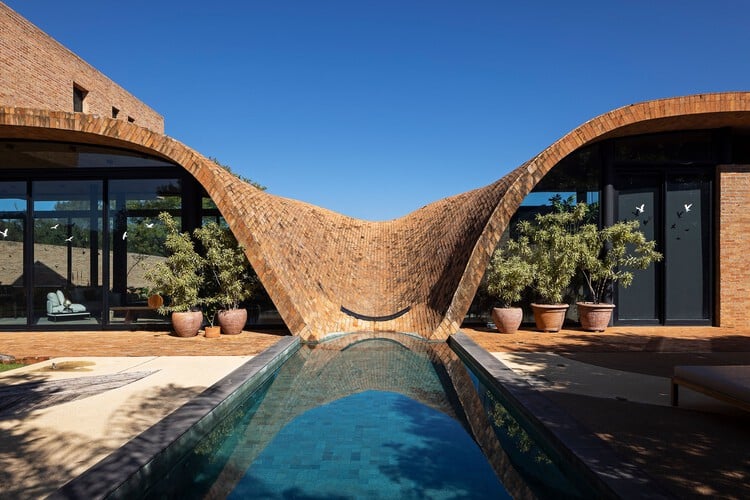
Creating Comfortable, Sustainable Spaces for Generations
Passive House design represents more than just an energy efficiency strategy—it’s a comprehensive approach to creating buildings that serve occupants better while treading lightly on the planet. The exceptional comfort, superior air quality, and dramatic energy savings these buildings provide demonstrate that sustainability and quality of life are complementary, not competing, goals.
As construction technology advances and climate awareness grows, the principles underlying Passive House design will become increasingly mainstream. Early adopters gain competitive advantages, superior buildings, and the satisfaction of contributing meaningfully to climate change mitigation.
Whether you’re planning a new home, considering a major renovation, or involved in commercial construction, exploring Passive House standards offers a proven pathway to exceptional performance. The initial learning curve and modest cost premiums are investments that pay dividends for decades through lower operating costs, enhanced comfort, and environmental stewardship.
The future of building is already here in Passive House design—a future where structures work with nature rather than against it, where comfort doesn’t require excessive energy consumption, and where our built environment contributes to solving rather than exacerbating the climate crisis. By unlocking these secrets and applying these principles broadly, we can revolutionize energy efficiency and create a genuinely greener future for generations to come.
