
Anúncios
Fashion is experiencing a transformative shift as textile recycling and circular design redefine how we create, consume, and cherish our clothing.
♻️ Understanding the Fashion Industry’s Environmental Crisis
The fashion industry stands as one of the world’s most polluting sectors, generating approximately 92 million tons of textile waste annually. This staggering figure represents not just discarded garments, but also a massive loss of resources, energy, and potential. The linear “take-make-dispose” model that has dominated fashion for decades is proving unsustainable, pushing our planet toward environmental catastrophe.
Anúncios
Traditional fashion production consumes enormous quantities of water, with a single cotton t-shirt requiring approximately 2,700 liters of water to produce. Additionally, the industry accounts for roughly 10% of global carbon emissions, surpassing international flights and maritime shipping combined. The chemical treatments, synthetic dyes, and fossil fuel-based materials further compound the environmental damage, polluting waterways and contaminating soil.
Fast fashion has accelerated this crisis exponentially. With brands releasing new collections weekly and encouraging constant consumption, clothing has become increasingly disposable. The average garment is worn only seven times before being discarded, and less than 1% of materials used to produce clothing are recycled into new garments. This wasteful cycle cannot continue if we hope to preserve our planet for future generations.
Anúncios
🔄 What is Circular Fashion and Why It Matters
Circular fashion represents a revolutionary approach to clothing production and consumption, fundamentally challenging the industry’s traditional linear model. At its core, circularity means designing garments with their entire lifecycle in mind—from sourcing sustainable materials to ensuring products can be repaired, reused, and ultimately recycled back into new textiles.
This regenerative system mimics natural ecosystems where waste doesn’t exist; instead, every element becomes a resource for something else. In circular fashion, materials flow continuously through the economy, minimizing waste and maximizing value. This approach requires collaboration across the entire supply chain, from fiber producers and manufacturers to retailers and consumers.
The benefits of circular fashion extend beyond environmental protection. Economically, circularity creates new business opportunities in repair services, rental platforms, resale markets, and innovative recycling technologies. Socially, it promotes ethical labor practices and fosters deeper connections between people and their clothing, encouraging mindful consumption over mindless accumulation.
Key Principles of Circular Fashion Systems
Several foundational principles guide the circular fashion movement, each contributing to a more sustainable industry:
- Design for longevity: Creating durable, timeless pieces that resist trends and physical wear
- Material innovation: Utilizing recycled, biodegradable, and regenerative fibers
- Transparent supply chains: Ensuring traceability from raw material to finished product
- Extended product lifespans: Facilitating repair, alteration, and refurbishment services
- Closed-loop systems: Developing infrastructure for collecting and processing used garments
- Consumer engagement: Educating shoppers about sustainable practices and responsible disposal
🧵 Textile Recycling Technologies Transforming the Industry
Innovative recycling technologies are emerging as game-changers in fashion’s sustainability journey. These advancements enable the transformation of textile waste into valuable resources, closing the loop in fashion’s production cycle and dramatically reducing environmental impact.
Mechanical recycling involves physically breaking down textiles into fibers that can be respun into new yarns. This process works particularly well for natural fibers like cotton and wool, though the resulting fibers are typically shorter and may require blending with virgin materials for strength. While mechanical recycling has limitations, it remains energy-efficient and widely accessible, making it an important component of circular systems.
Chemical recycling represents a more sophisticated approach, using solvents or chemical processes to break textiles down to the molecular level. This technology can handle blended fabrics and synthetic materials that mechanical recycling cannot process effectively. Companies like Renewcell and Worn Again Technologies are pioneering chemical recycling methods that produce fibers indistinguishable from virgin materials, opening exciting possibilities for truly circular fashion.
Emerging Innovations in Fiber Recovery
Beyond traditional recycling methods, cutting-edge innovations are revolutionizing how we recover and reuse textile fibers. Enzymatic recycling uses biological catalysts to selectively break down specific materials, particularly polyester, returning them to their original monomers. This process operates at lower temperatures than chemical recycling, reducing energy consumption significantly.
Biotechnology is also contributing solutions, with researchers developing bacteria and fungi capable of digesting synthetic fibers and producing useful byproducts. While still largely experimental, these biological approaches could eventually provide low-impact methods for processing complex textile waste streams.
👗 Leading Brands Pioneering Circular Fashion Models
Progressive fashion brands are demonstrating that sustainability and profitability can coexist. These companies are implementing circular principles throughout their operations, proving that responsible business practices can drive innovation and customer loyalty.
Patagonia has long championed environmental responsibility, offering repair services, accepting used garments for resale through their Worn Wear program, and creating products from recycled materials. Their commitment extends beyond their own operations, with the company actively supporting environmental causes and encouraging customers to buy less and choose quality over quantity.
Eileen Fisher has built circularity into her brand’s DNA through the Take Back program, which collects used garments regardless of condition. Wearable pieces are cleaned and resold, while damaged items are redesigned into new creations or shredded for fiber recovery. This comprehensive approach demonstrates how brands can create value from post-consumer waste.
Swedish brand Ganni has committed to becoming circular by 2027, implementing initiatives like garment rental services, repair workshops, and designing collections with recyclability in mind. Their transparency about progress and challenges provides a roadmap for other brands pursuing similar transformations.
🌱 The Role of Consumers in Fashion’s Circular Future
While industry innovation is essential, consumer behavior ultimately determines fashion’s sustainability trajectory. Individual choices collectively shape market demand, influencing what brands produce and how they operate. Embracing circular fashion requires shifting from quantity-focused consumption to quality-conscious participation.
Consumers can support circularity by prioritizing durability over disposability, investing in well-made pieces designed to last years rather than seasons. This approach may require higher upfront costs but proves economical over time while dramatically reducing waste. Learning basic repair skills—sewing buttons, mending seams, removing stains—extends garment lifespans and deepens our connection to our clothing.
Participating in secondhand markets, whether through thrift stores, vintage boutiques, or online resale platforms, keeps garments in circulation longer and reduces demand for new production. These markets have exploded in popularity, with platforms like Depop, Vinted, and ThredUp making secondhand shopping accessible and appealing to younger consumers particularly.
Practical Steps Toward Sustainable Style
Transitioning to circular fashion doesn’t require perfection—small, consistent actions create meaningful impact:
- Audit your wardrobe: Understand what you own, wear regularly, and actually need
- Practice the 30-wear rule: Before purchasing, ask if you’ll wear it at least 30 times
- Care properly: Follow washing instructions, air dry when possible, and store correctly
- Explore rental services: For special occasions or trend experimentation
- Support sustainable brands: Research companies committed to ethical and environmental practices
- Dispose responsibly: Donate, sell, or recycle rather than discarding in general waste
📊 Economic Opportunities in Circular Fashion Systems
The transition to circular fashion isn’t just environmentally necessary—it’s economically advantageous. According to research by the Ellen MacArthur Foundation, circular economy principles could generate $192 billion in economic benefits for the fashion industry by 2030 through reduced material costs, new revenue streams, and operational efficiencies.
Repair and alteration services represent growing markets as consumers seek to extend garment lifespans. Independent tailors, brand-operated repair shops, and mobile mending services are proliferating, creating jobs while reducing waste. These services foster local economies and preserve traditional craftsmanship skills at risk of disappearing.
The resale market has experienced explosive growth, projected to reach $77 billion globally by 2025. This sector creates opportunities for entrepreneurs, provides affordable fashion access, and generates value from existing resources. Technology platforms facilitating peer-to-peer sales have democratized resale, making participation easy for anyone with a smartphone.
Investment in Recycling Infrastructure
Developing robust textile recycling infrastructure requires substantial investment but promises significant returns. Governments, private investors, and fashion brands are increasingly funding collection systems, sorting facilities, and processing technologies. These investments create jobs, reduce landfill burdens, and establish the foundation for truly circular textile systems.
| Circular Business Model | Economic Benefit | Environmental Impact |
|---|---|---|
| Clothing Rental | Recurring revenue, asset maximization | Reduced production demand, lower resource consumption |
| Repair Services | New service sector, skilled employment | Extended product lifespan, waste reduction |
| Resale Platforms | Commission-based income, market expansion | Diverted landfill waste, decreased virgin production |
| Take-back Programs | Customer retention, material recapture | Closed-loop systems, resource efficiency |
🌍 Policy and Regulation Driving Circular Transformation
Government intervention is proving essential for accelerating fashion’s circular transition. Regulatory frameworks create level playing fields, incentivize sustainable practices, and hold companies accountable for environmental impacts. Progressive policies are emerging globally, signaling regulatory tightening ahead.
The European Union has positioned itself as a leader in circular fashion regulation. The EU Strategy for Sustainable and Circular Textiles, announced in 2022, establishes comprehensive requirements for eco-design, digital product passports, and extended producer responsibility. These measures will fundamentally reshape how fashion operates within Europe and influence global standards.
France has implemented groundbreaking legislation prohibiting the destruction of unsold clothing and requiring brands to disclose environmental impacts. Extended Producer Responsibility (EPR) schemes increasingly require fashion companies to finance collection and recycling of their products, internalizing end-of-life costs previously borne by municipalities and taxpayers.
💡 Technology Enabling Transparency and Traceability
Digital technologies are crucial enablers of circular fashion, providing transparency and traceability throughout complex global supply chains. Blockchain technology allows for immutable records of a garment’s journey from raw material through production, retail, and potentially multiple owners, creating accountability and enabling informed consumer choices.
Digital product passports—essentially digital identities for garments—store information about materials, manufacturing processes, care instructions, and end-of-life options. These passports facilitate recycling by providing processors with precise material composition data, improving recycling efficiency and output quality. They also combat counterfeiting and support resale markets by verifying authenticity.
Artificial intelligence and machine learning are optimizing textile sorting, a traditionally labor-intensive bottleneck in recycling processes. Automated systems can identify fiber types, assess garment condition, and route items to appropriate processing channels faster and more accurately than manual sorting, making large-scale textile recycling economically viable.
🎯 Overcoming Barriers to Circular Fashion Adoption
Despite promising developments, significant barriers impede widespread circular fashion adoption. Infrastructure gaps remain substantial—most regions lack adequate collection systems and processing facilities for textile waste. Building this infrastructure requires coordinated investment and political will that varies dramatically across regions.
Economic structures currently favor linear production. Virgin materials often cost less than recycled alternatives due to economies of scale, subsidies for fossil fuel extraction, and externalized environmental costs. Correcting these market distortions through carbon pricing, subsidy reform, and incentives for recycled materials is essential for making circular fashion economically competitive.
Consumer behavior change presents persistent challenges. Convenience, habit, and cultural associations between newness and status drive continuing demand for fast fashion despite growing awareness of environmental consequences. Shifting these deeply ingrained patterns requires sustained education, accessible alternatives, and cultural change that values sustainability and longevity over disposability.
✨ The Future Vision: Fashion Reimagined
Imagining fashion’s circular future reveals exciting possibilities—an industry regenerative rather than extractive, where waste is eliminated through intelligent design and closed-loop systems. Garments could carry digital histories, connecting wearers across time and geography, creating emotional bonds that transcend disposability.
Advanced materials derived from agricultural waste, captured carbon, or lab-grown processes could eliminate dependence on resource-intensive conventional fibers. Production might occur locally using digital manufacturing technologies, reducing transportation emissions while enabling customization and on-demand creation that eliminates overproduction.
Fashion could evolve from ownership to access, with rental and subscription models normalizing garment sharing. This shift would dramatically reduce the number of items produced while maintaining style diversity and personal expression. Community repair cafes and skill-sharing initiatives might revive appreciation for craftsmanship and foster social connections around sustainable practices.
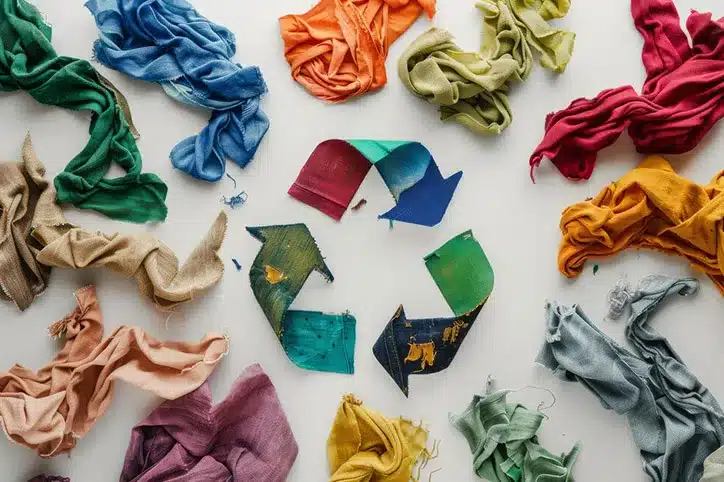
🚀 Taking Action: Building Momentum for Systemic Change
Revolutionizing fashion through textile recycling and circularity demands action from all stakeholders. Brands must invest in sustainable materials, transparent supply chains, and take-back infrastructure. Designers should prioritize durability, modularity, and recyclability from conception. Investors need to support circular business models and recycling technologies.
Policymakers must establish regulatory frameworks that internalize environmental costs, incentivize sustainable practices, and build necessary infrastructure. Researchers should continue developing innovative materials and processes that make circularity technically and economically feasible at scale.
Consumers wield tremendous power through purchasing decisions, care practices, and disposal choices. By demanding transparency, supporting sustainable brands, extending garment lifespans, and participating in circular systems, individuals collectively drive market transformation. Education and awareness-raising amplify this impact, creating cultural shifts that normalize sustainable fashion.
The revolution in sustainable style through textile recycling and circularity has begun, driven by technological innovation, regulatory pressure, business model transformation, and evolving consumer values. While challenges remain substantial, the trajectory is clear—fashion’s future must be circular. The power to accelerate this transition resides in choices made today by brands, policymakers, and consumers alike. By embracing circular principles, we can transform fashion from environmental liability to regenerative force, creating style that sustains both people and planet for generations to come. 🌿
